The world is watching in shock and horror as the invasion of Ukraine unfolds on a daily basis.Writing about the making of a garden seems irrelevant when people are fighting for their very existence.The events in Europe will impact many lives for a long time to come and the obvious comparison with WW2 is readily being made by commentators.
Andy was brought up in the country, his father was the chauffeur and handyman to the local coal mine executive. Understanding the countryside became second nature, he learned to shoot and was fit and strong because living in the country meant the main way to get about was to walk – or in Andy’s case run. He ran to school where his main interest was football – he learned to write well, with very distinctive and elegant handwriting. He could handle numbers but in no way would he be considered academic. He helped out with animals that were kept on the estate.
His proficiency at football – a strong and aggressive wing half – got him noticed and at the age of 18 he signed professional papers and joined Huddersfield Town, a first division outfit. Whilst his earning capability was not at the eyewatering levels of todays professionals, he did earn orders of magnitude more than my grandfather. However, his professional career was short lived as at the age of 19, he was given a free transfer from Huddersfield to the Durham Light Infantry. His contribution to Britains war effort, starting in 1939, had begun.

Andy gave me his sergeant’s stripes and his DLI cap pin but he didn’t talk much about the war. He did relate the odd anecdote though.He was fit and he could shoot so he found himself training new recruits whilst at the same time guarding a significant part of the coast line in the north of England. His squads were charged with building faux gun installations by putting old telegraph poles and lamp posts into the ground,building a box around them and then a covering with camouflage netting finished the job. From the air, enemy spotter planes would think the coast was heavily fortified.
The northern coastline is home to many colonies of gulls and terns and Andy used his knowledge of the natural world to enhance the diet of his troops. In the Spring, the smallest member of the squad was roped up and put over the cliff edge to collect seagull eggs. Andy told them to only collect eggs from nests with one egg in them. The logic – seagulls have 2 eggs in a clutch, if there is only one egg then it has been freshly laid and edible. The birds will then lay the second egg and rear a single chick.
In 1943 Andy was granted a 48 hour pass so that he could marry his sweetheart,Irene. A wartime wedding – which is another story.
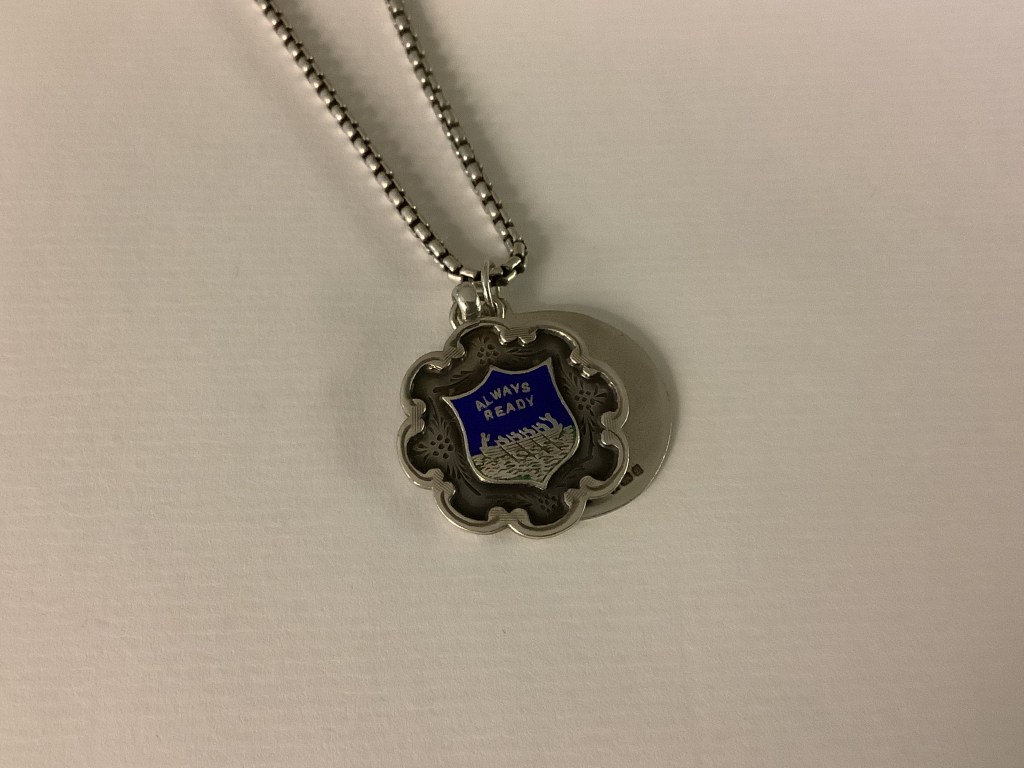
When the war was over Andy returned home, took a job in the coal mines – the only real option open to him, but did play a few seasons football as a semi professional. A handful of medals are testament to this. In all the interactions I had with my dad, not once did he reference the lost opportunity of being a professional footballer – the possible route to a different life. A pragmatist? A realist ? Whatever. He was just grateful for the life he had.
 AndAllenGarden