Japanese Maples- characteristics of a favorite!

In a different life, I was responsible for quite a big operation – lots of people and a fair bit of value. Of course, I did not manage this all by myself, I had great help from a very capable, diverse team. Now most teams have an individual who acts as a moderator/influencer , a conduit to allow issues to be aired for discussion – we were fortunate to have someone play this role.

Early in the genesis of my team, the moderator suggested that I favored one individual over other team members and would I like to comment on this?

Acer kandy kitchen – the latest addition to the Japanese garden

Most people would have probably just denied this suggestion and perhaps moderated their behavior for a short while just to get the issue to go away. However, I thought about this for a second or two and realized this was too good an opportunity to miss. My response was that I did not have favorites on the team, valuing people as individuals……… but I could see why some members of the team came to that conclusion. I cannot help myself in that I am drawn to people with certain characteristics – like those that #17 displayed – great work ethic; intelligent, developer of people; a team player who delivered results but was cognizant of “the how” being as important as “the what”; didn’t play games putting the company ahead of personal aspirations ; a value set that defines ”good human beings”. The moderator took the message back to the team – slightly different from what was anticipated!

The ability to characterize is a useful tool that I have employed in a number of settings. In the garden I have used it in design to make sure that the elements both CP and I appreciated were incorporated in AndAllen.

Acer palmatum waterfall

Japanese maples have been favorites of ours for many years, but only went ”big” on them towards the end of our time at the Ridge garden.They have many terrific characteristics. They are all season plants – vibrant color as buds burst; all shades of green and red when in full leaf; fabulous range of autumn color; diverse leaf texture ; varied form – tall,weeping,dwarf,columnar,flat – exagerated in winter once leaves have dropped.

Unusual leaf shape and texture of A.palmatum Shishigashira
Burgundy red,finely cut leaves of A.palmatum Tamukeyama

Acers can look spectacular individually

A.palmatum Mikawa yatsabusa

…. but like a good team, collectively they are splendid – the overall effect of a collection being greater than the sum of the individual parts.

Only 2 months in and showing promise. This planting has been designed to show its true form in 3-5 years.

Decisions,Decisions!

Emotional or analytical?

A while ago, great store was placed on analytical decision making. Careful consideration of the facts and situation leading to decisions which hopefully resulted in the desired outcome.An acceptable trade off between lead time and value delivery. The world then became a little impatient and the focus transitioned to nimble management – a lot more emphasis on speed of (perhaps suboptimal) value creation.

Fast forward to the digital world and the creation of social media – instantaneous responses with limited thought – emotional decision making becoming the norm? Value apparently skewed to the response pecking order rather than the thought content.Sometimes it works – sometimes the outcome is calamitous – losing your job due to an ill-advised tweet?

Plant today – result in 200+ years!

The rule of thumb that the time to decide on a course of action should be proportional to the importance of the outcome seems to have gone the same way as the dinosaurs – ( CP did it right, it took her 2 years to respond to my very romantic offer of marriage!).

In the world of gardening the same dilemma of decision making applies – every time we enter a garden center we are at risk of making an emotional decision. Plants are out on the benches, in bloom – awaiting the “Ooh!” response of ”I must have that” – a desire without any consideration of “is this the right plant for the right place”? I inherited Baptisia australis at the Ridge garden – loads of gardeners love this plant. It looks ok for about 2 weeks, violet- blue flowers and then is (in my opinion) awful – ungainly seed heads,quite an aggressive spreader,horrible die back – before thankfully being cut down early autumn. I swore I would never give it house room again…………
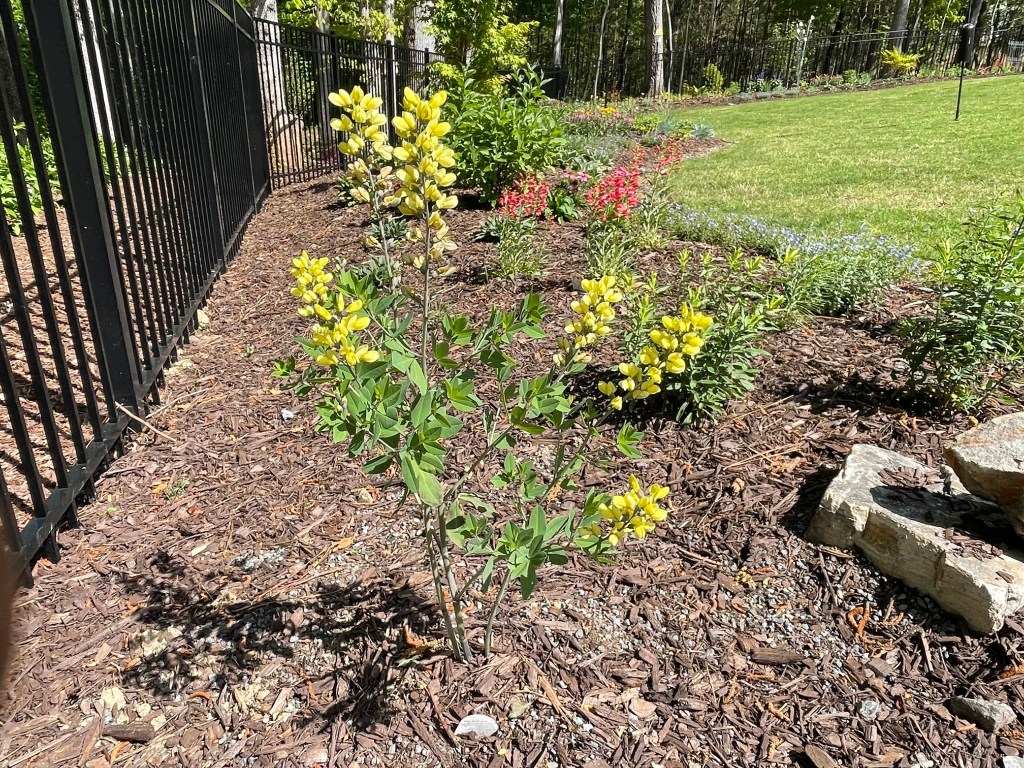
Baptisia ‘lemon meringue”

………then I saw a modern yellow hybrid which looked as if it could be both well behaved and interesting. A truly emotional, on the spur of the moment, decison.Will I regret it?

The worst gardening decision I have ever made was to give away the right to make a decision. Total abdication on my part. I was still working, under pressure and needed some planting done. I was happy to delegate plant selection to ” an expert” but then, sadly, spend the next 5 years scouring the garden to get rid of a very invasive dwarf spurge. A little research and analysis on my part would have saved a lot of anguish.

No doubt mistakes have been made here!

Part of the fun of gardening is trying new things; taking a punt on a new plant; mixing things up a bit; allowing mother nature to exert her influence; taking a gamble on a $15 plant that may be on the cusp of your hardiness zone… but along the way, every now and then, stop to take a breath and do a bit of analysis.

Bit like life really.
Jethro Tull and snake!

Back in the day, when companies thought it was a good idea to have Christmas parties and there were people happy to organize them ( shout out Pammy Sue) – we had staff discos. Food,dancing and door prizes, one of which was to identify the first song played at the start of the disco. Every year it was the same song – The Teacher by Jethro Tull – a catchy little number.

The original Jethro Tull perfected the automatic horse drawn seed drill which helped revolutionize agriculture – interestingly some original documentation relating to this is held in the Robinson Library in Armagh. At great expense, about $15, we now have Jethro Tull in AndAllanGarden.

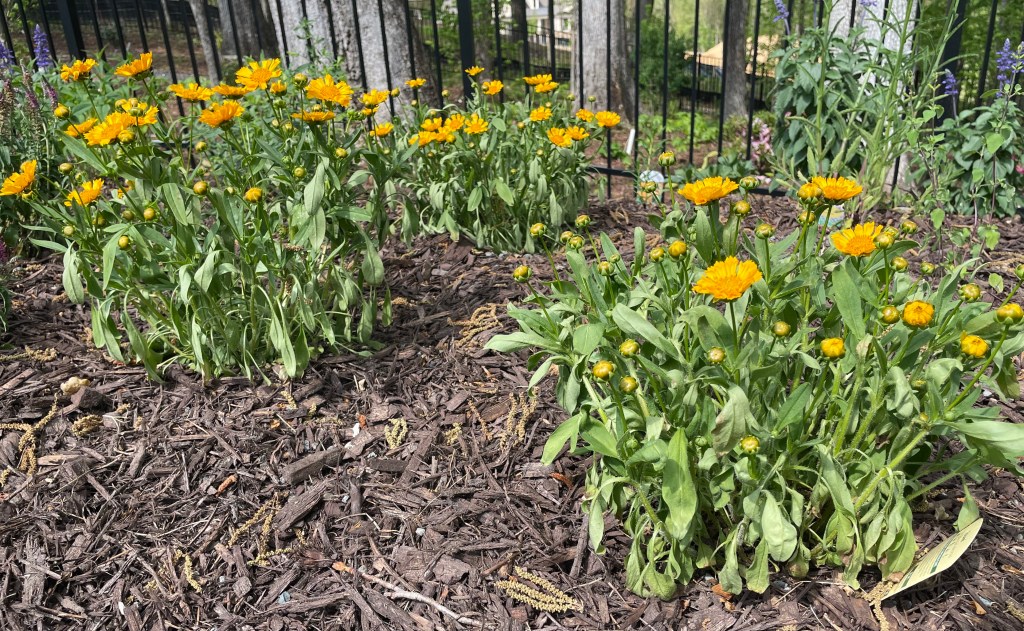
Coreopsis “Jethro Tull” – a highly floriferous tickseed

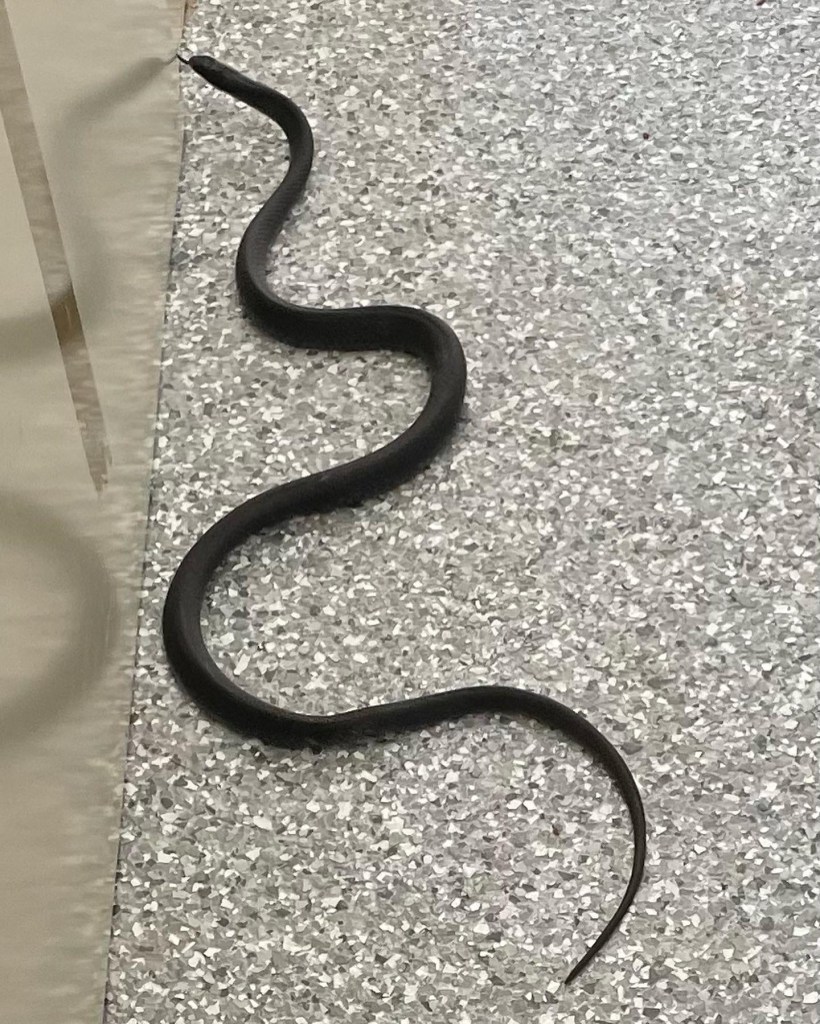
The day can be full of surprises. After taking this photo, I was going to plant out a few new additions to the crevice garden fringe and just popped to the garage to put away a few bits and pieces first. I got there just in time to see a tail disappear behind the tool chest- a snake – species unknown! This has happened to me before – having a snake take up lodgings in the garage in NC. That snake turned out to be poisonous – and the eviction process did not end well for the snake.

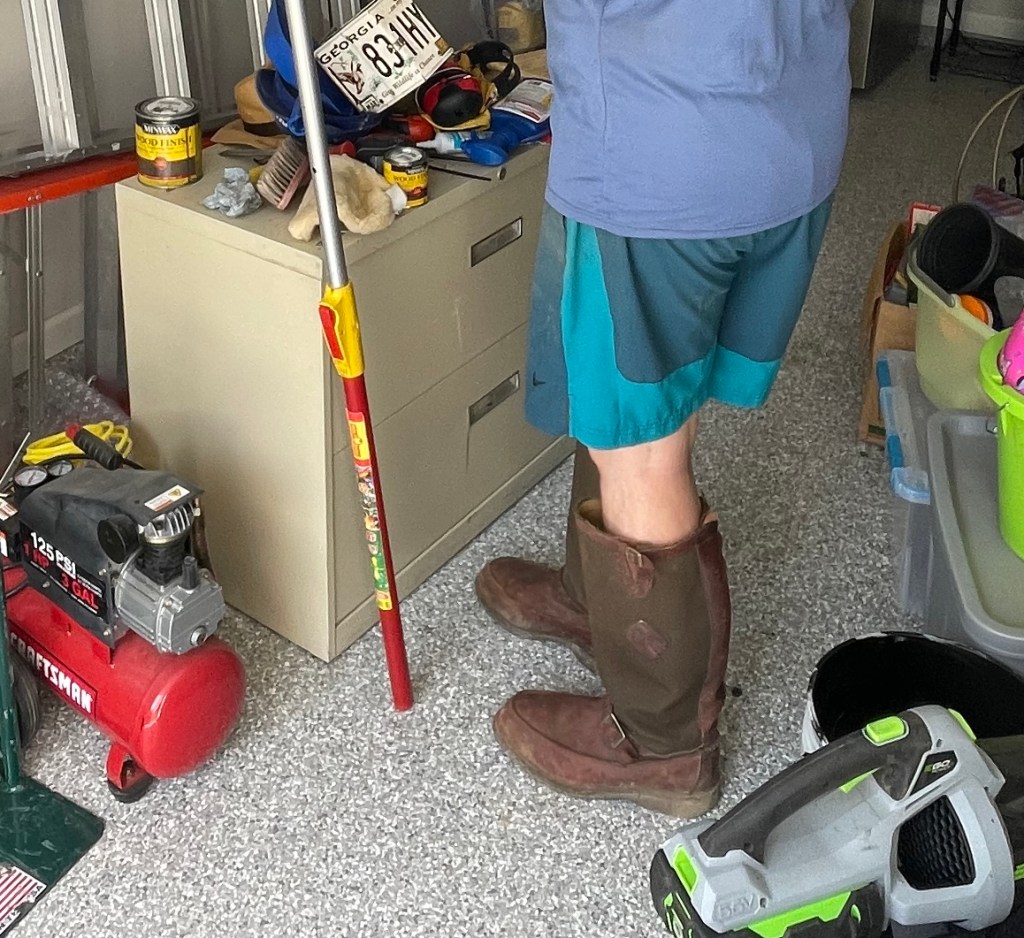
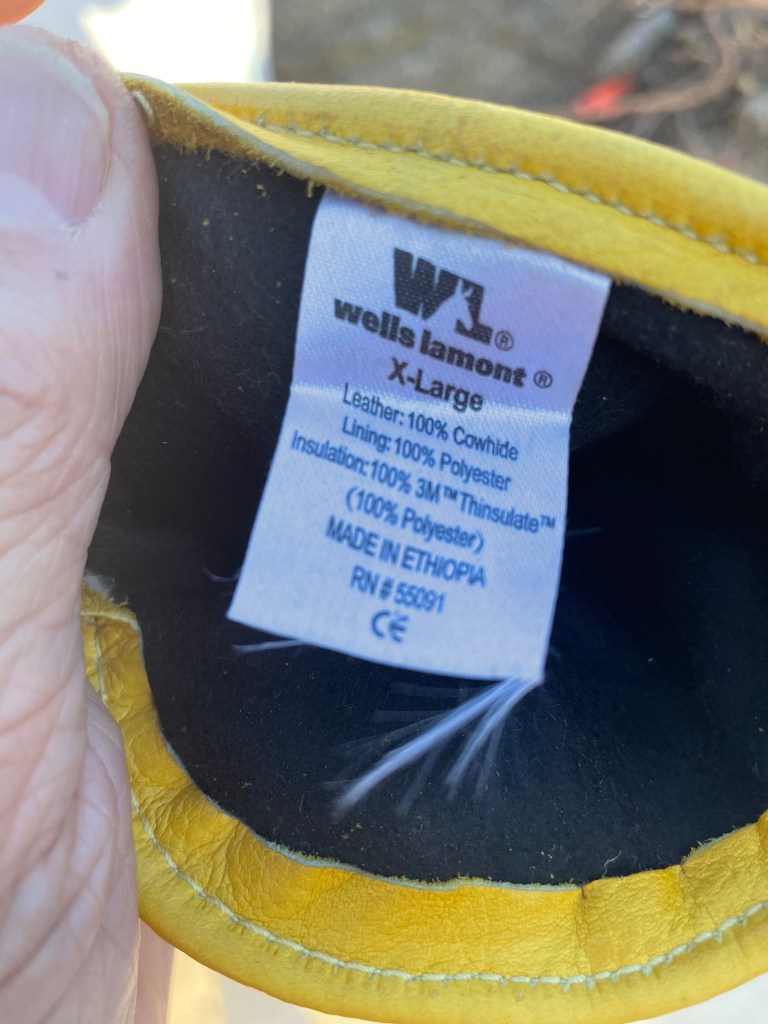
I knew this eviction could be difficult as my garage was still not sorted aftervthe move and there were lots of hidy holes for the snake. I needed my snake boots – which sadly were stored next to the tool chest hiding the snake ( poor scenario planning on my part). I carefully extracted these and put them on without seeing the snake. I have written before about the Ethiopia made, thick leather, winter gardening gloves Mads bought me – these now double up as snake gloves. I could now go looking for the snake.

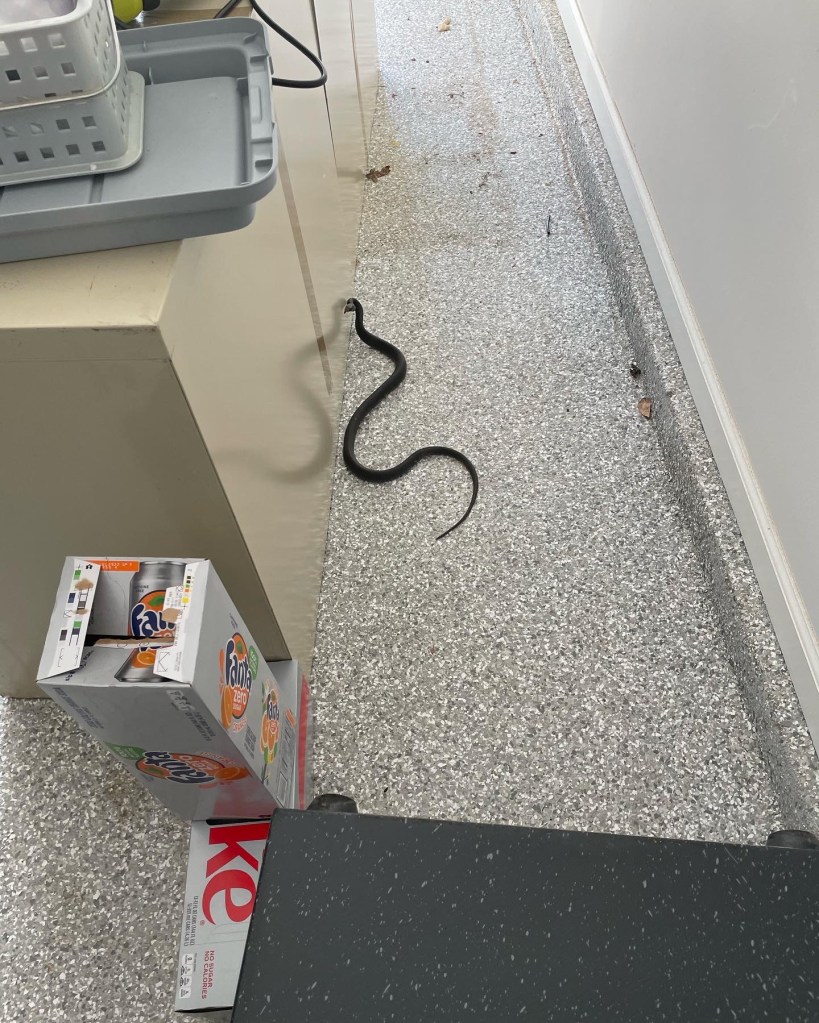
As I moved the tool chest I saw it – 3-4’ black snake – harmless to me – good to have in the neighborhood. I spent about 90 minutes trying to get it to go out the garage door – using my 7’ handle dutch hoe as a prop. It moved from tool chest,to freezer,to a second cabinet and back again – numerous times – getting more irritated as time went on.

Nice epoxy garage floor!

Eventually,I got it to see the light of day and it left the garage- a few carefully administered flicks with the hoe and it was off our property and over the road on the fallow building plot. It was safe and I was relieved.

Heading in the right direction at last!

I am sure the Teacher would advise that the garage door should be kept shut to deter snakes that are looking for shade from the hot sun! ( and to store your snake boots out in the open!).

For the uninitiated kevlar lined snake boots!

Herbaceous borders

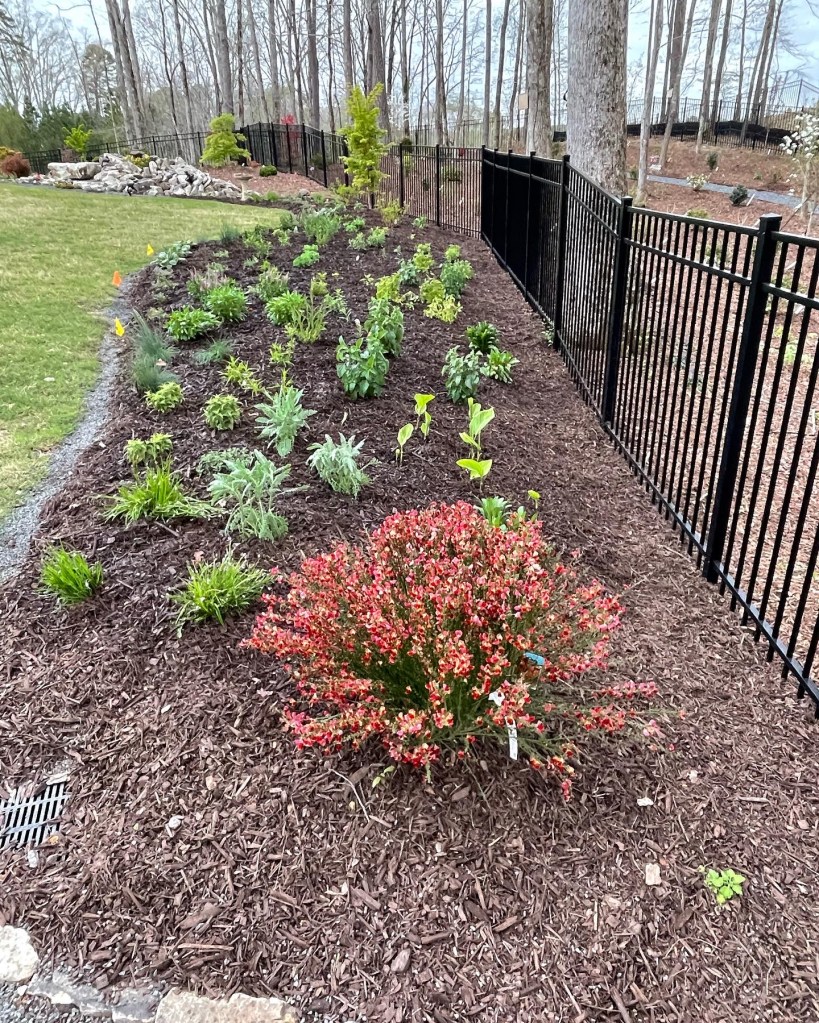
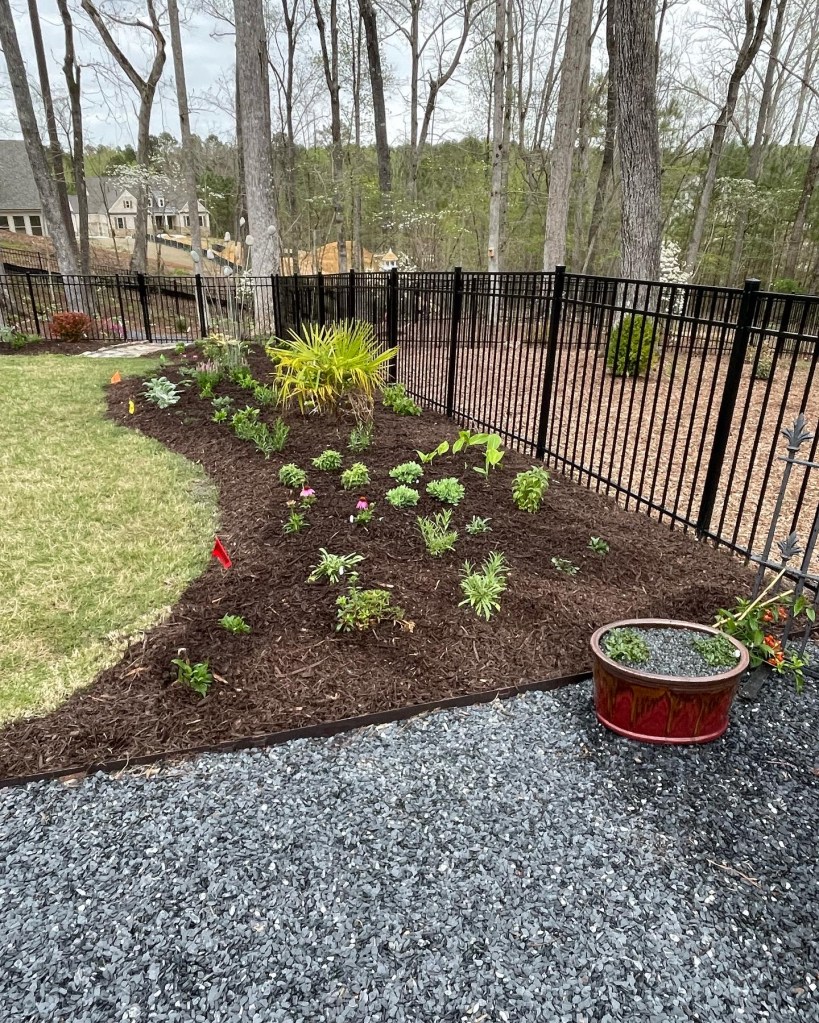
The third phase of the creation of AndAllen was the installation of 2 herbaceous borders. The preparation for these was completed during phase 2 so all that was left to do was source the plants and get them into the ground during the sweet spot – the short period of time between the last frost and the blistering heat of summer.

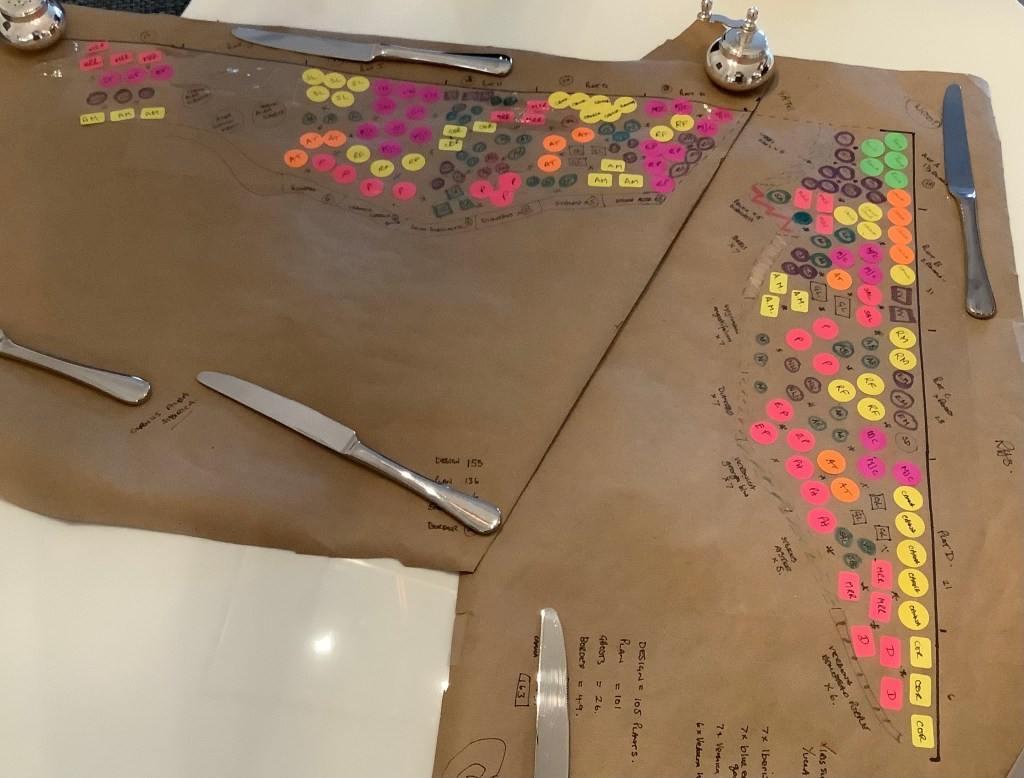
The plant layout – give or take!

I had always been impressed by the designs of Piet Oudolf – repetitions of perennials and grasses on a large scale. Harmony of plant height, flowering season, color and texture – the overall look being greater than the sum of the parts. Add onto this a bit of influence from the Irish designer Jimi Blake by throwing in a hint of tropical planting – then that was the scheme for these 2 beds. Reality check – highly unlikely that the desired look will be achieved on the first pass due to a number of factors – plant availability, not all original selections could be sourced; whether all the plants sourced will thrive in the GA climate; there will be a number of wrong plant/wrong place choices.

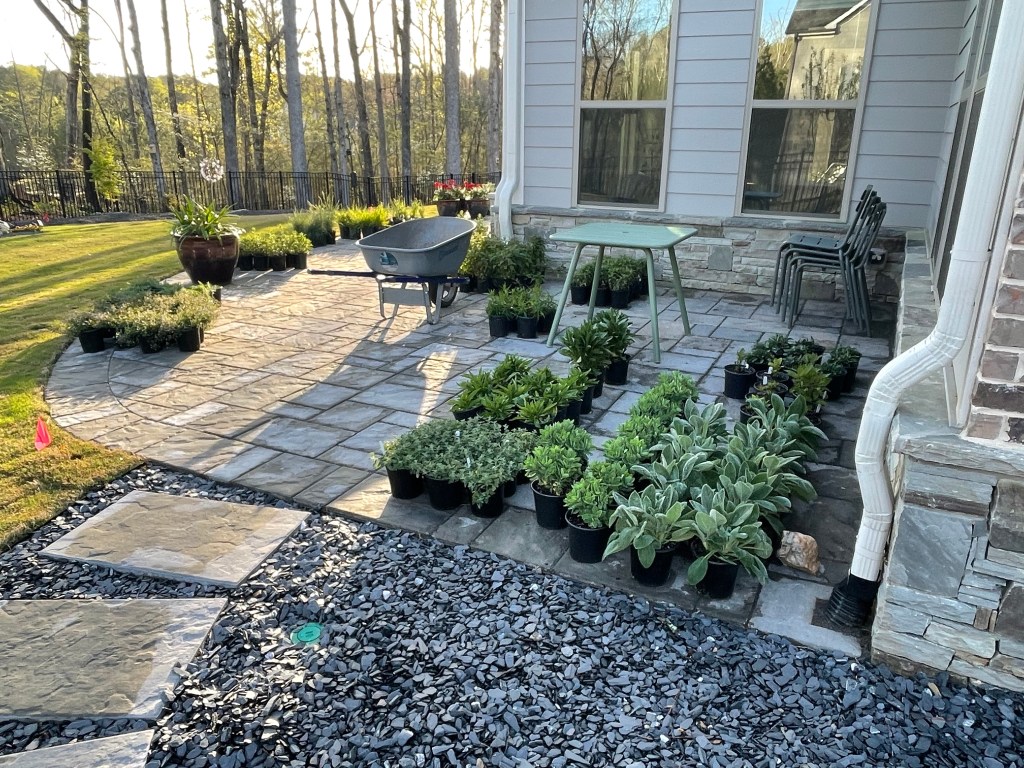
Plants delivered

Early in the placing out of the plants it became clear that the decision to replace the majority of the clay with a bespoke planting medium was a great idea – additional cost but the consistency of drainage and ease of planting would be a lifetime benefit. The task of placing 240 plants was eased with a bit of help from Mads and Rosie.

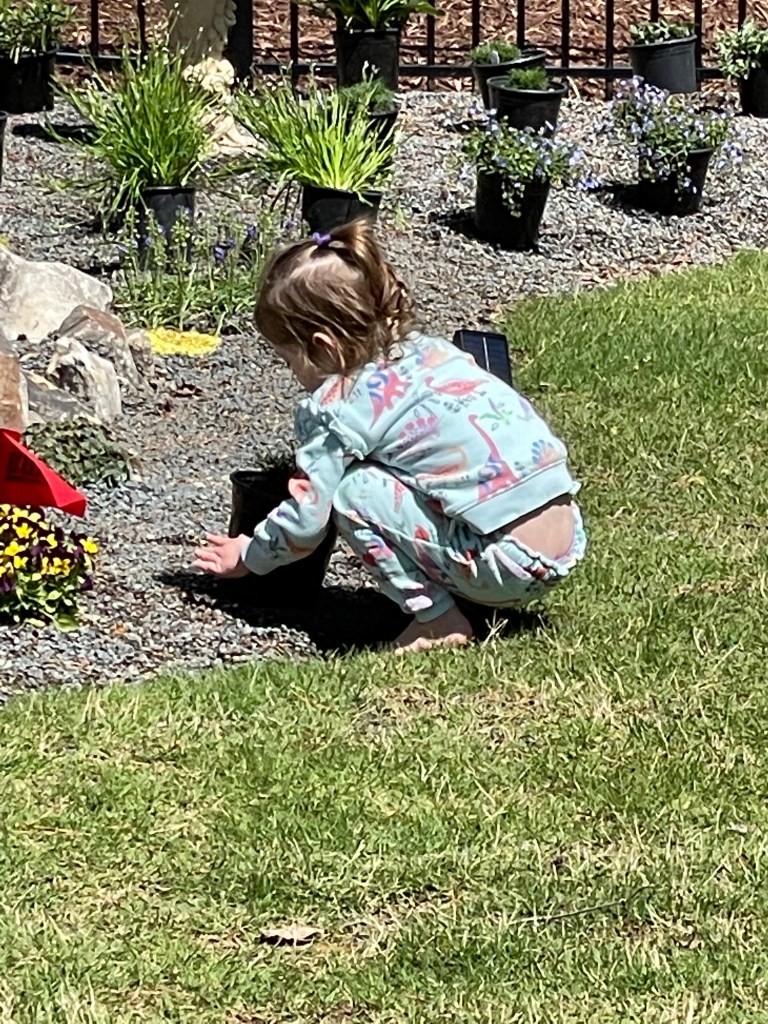
Apprentice gardener!
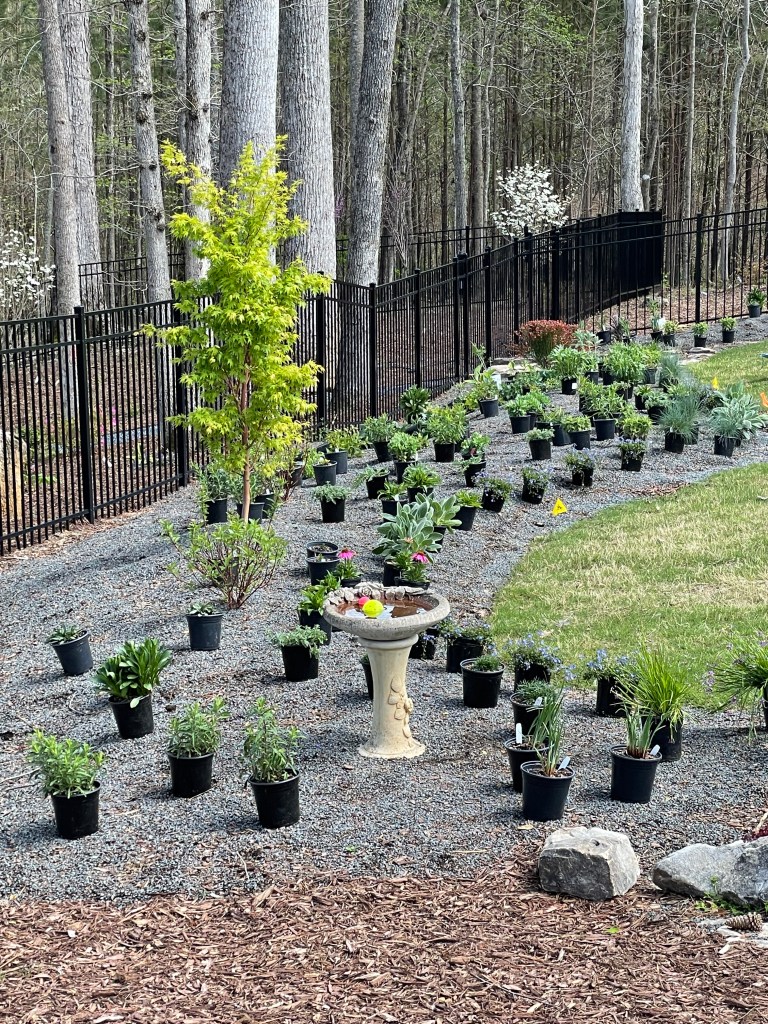
Ready to go!

The plant list included – New England Aster (Raydon Favorite); Eupatorium maculatum;shasta daisy; sedum autumn joy; Veronica georgia blue; Monarda Jacob Cline;Stachus,lambs ears; blue eye grass;Stokes aster; blue festuca; amsonia hubrechti; iris sibirica; achillea moonshine ;Nepeta walkers low ; penstemon ; Baptisia australis; Gaura lindheimerei ; Monarda balmy rose ; phlox paniculata; salvia ; echinacia ; coreopsis ; verbena bonariensis ; rudbeckia goldsturn and Canna.

All the pots were recycled
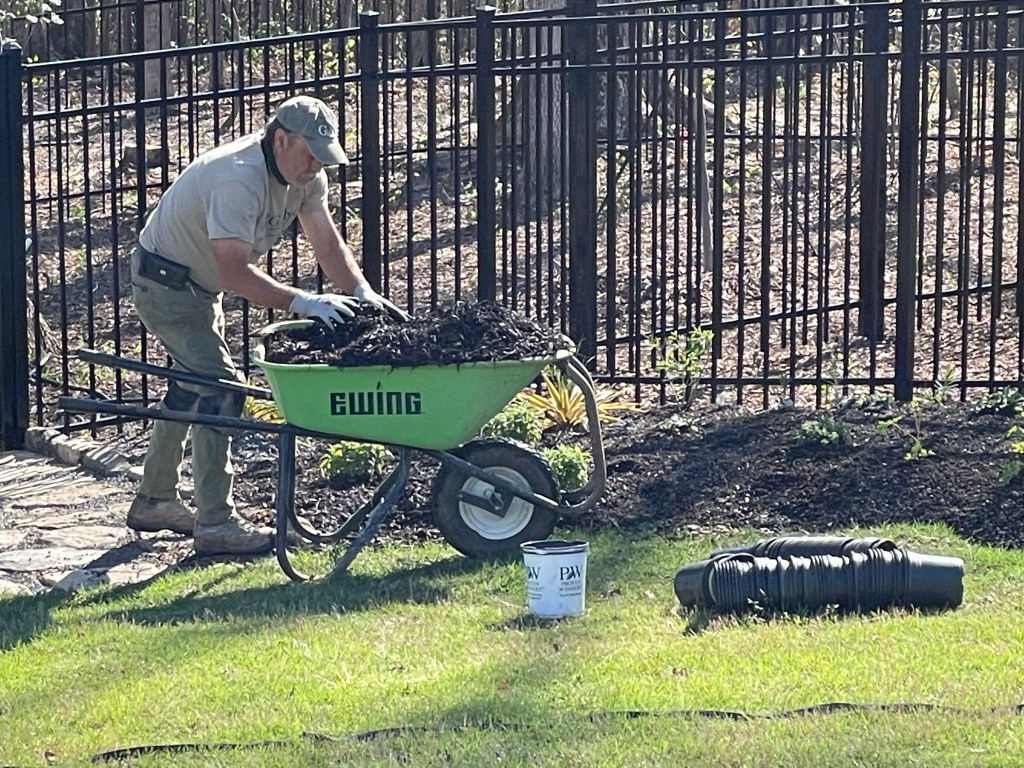
A covering of mulch

After planting and mulching, all that was required was a good watering!

The finished job!

Pippo Borello (1938-2022)

A piece of art can trigger many emotions from the ho-hum to the wow. The impact of artwork obviously depends very much on the individual – but generally speaking CP and myself gravitate towards similar styles.Gallery owner Bill Hester, a good friend of ours, talks about paintings speaking to him – the more vivid the message the greater the attraction. This concept also explains why you can like many different styles of art.

Ponte Pietra in Verona Italy by Pippo.

Many years ago, our good friends Paola and Randolfo introduced us to their friends AnnaMaria and Pippo – a wonderful couple. Pippo, a highly regarded artist in Italy, produced artwork with a very distinctive style, capturing flow and movement with heavily applied swirls of color. A characteristic was the use of metallics – gold,silver,copper,verdigris. His subject matter very diverse. We fell in love with this painting at an exhibition of Pippo’s work in Cork , Ireland. Its message so strong it now occupies a prominent place in our home.

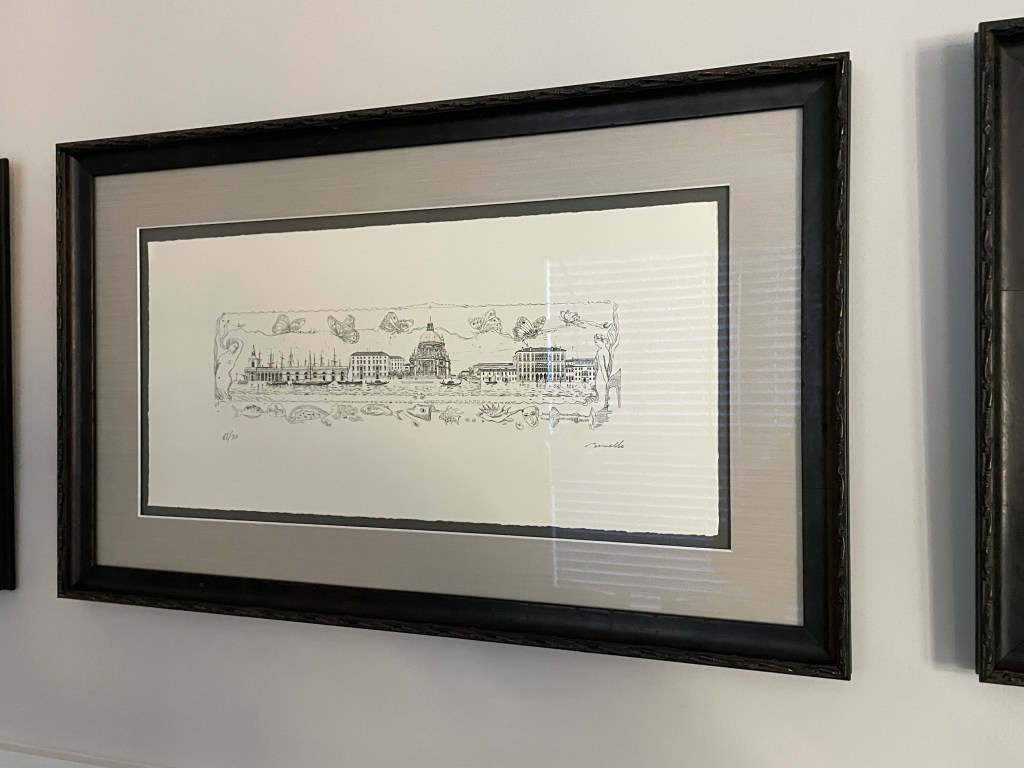
A limited edition print series focussing on Venice

This limited edition ( a series of 90) of 5 prints sold out many years ago, serendipity brought them to us when Randolfo saw a complete set for sale in an art market in a provincial town not far from Verona. Like Randolfo and Paola, Pippo and AnnaMaria are generous to a fault, with both our children being recipients of Pippo’s gift.

A beautiful lady gifted to a beautiful woman by a beautiful artist.

Sadly, last week Pippo left this world, peacefully in his sleep. Gone but not forgotten, he lives on in our minds as a talented,kind,generous human being.He will of course live on forever through his fabulous art.

Curiosity and Resilience

Throughout my working life, one of the human characteristics I came to admire is that of curiosity. Curiosity about the world around us; the people we meet; places, people and events that dominate the news; the why, where, when and how of everyday life. Curiosity is one of the building blocks of lifelong learning.

I am pleased to say that my good friend from Italy, Randolfo, is one of the most curious people I have ever met. As well as enjoying his company – he is interesting and interested – I benefit greatly from his curiosity, learning by association as we have some terrific discussions.We once shared a bottle of very nice wine from Virginia – within a short period of time, his research done, we were talking about this up and coming wine region.

Ethiopian gardening gloves

I have mentioned before the pleasure of getting your hands dirty in the soil and of course the need to occasionally protect your hands as you garden.I was curious that my favorite gloves (thanks Mads) were made,surprisingly, in Ethiopia. Randolfo and I often chat about globalization and the resulting complex supply chains so I mentioned the source of the gloves to him. ”Aaah” he said. Summarizing – Italy has a strong colonial link with Ethiopia; Italy is a leader in the design and sourcing of fine gloves (think fashion) ; trade and commerce has flourished between the two countries ; hence it is likely that my super comfortable gloves are a product of this cooperation – when you know, it is not that surprising?

The colonial link between Ethiopia and Italy – the proof!

I am starting to get curious about the woodland garden. Before the plot was developed there was quite a lot of native undergrowth beneath the mature trees. Now that spring has sprung, we about to experience the harmony between what we planted and what mother nature has given us. The intent in the woodland garden was not to fully curate it but to try and achieve a naturalistic blend. We are not yet at the starting line with this – exciting!

Mother nature emerging – Sanguinaria?

As CP and I walk the garden, the strife facing the world is never far away. With the pandemic and then the war in Ukraine, we realize that so many people’s lives have been irreversibly touched in the last 2 years. We are grateful for what we have and are cognizant of the fragility of both life and the society we live in. Resilience has become another important human characteristic and the garden offers so much. A place to relax – the wellbeing from the physical work- the mental satisfaction of creating something ( perfection is not the goal) – and of course, enjoying the wildlife. This, along with the joy of interacting with family and good friends, such as Randolfo and Paola, all helps to provide a positive outlook.

The coral honeysuckle responding to the warmer weather.

Design – Herbaceous Perennials

RollsRoyceGuy and the wonderful Fi paid us a brief visit as they were traveling from A to B. It was great to catch up. I had a sneak look at the sparkling blue truck bed – it was not in pristine condition -plenty of rock mulch silt wedged in the corners. During conversation RRG mentioned that the truck was now 8 years old – I thought ” this is the preamble to him changing the truck because the bed is dirty”! Anyway, the closet gardener, who declares he is not interested in gardening, had one subject he wanted to talk about – not cars; not the economic pressure due to inflation; not the discovery of Shackletons ship, Endurance, in the Arctic – but ……. succulents! This non-gardener is taking an interest in beautiful fleshy exotics!


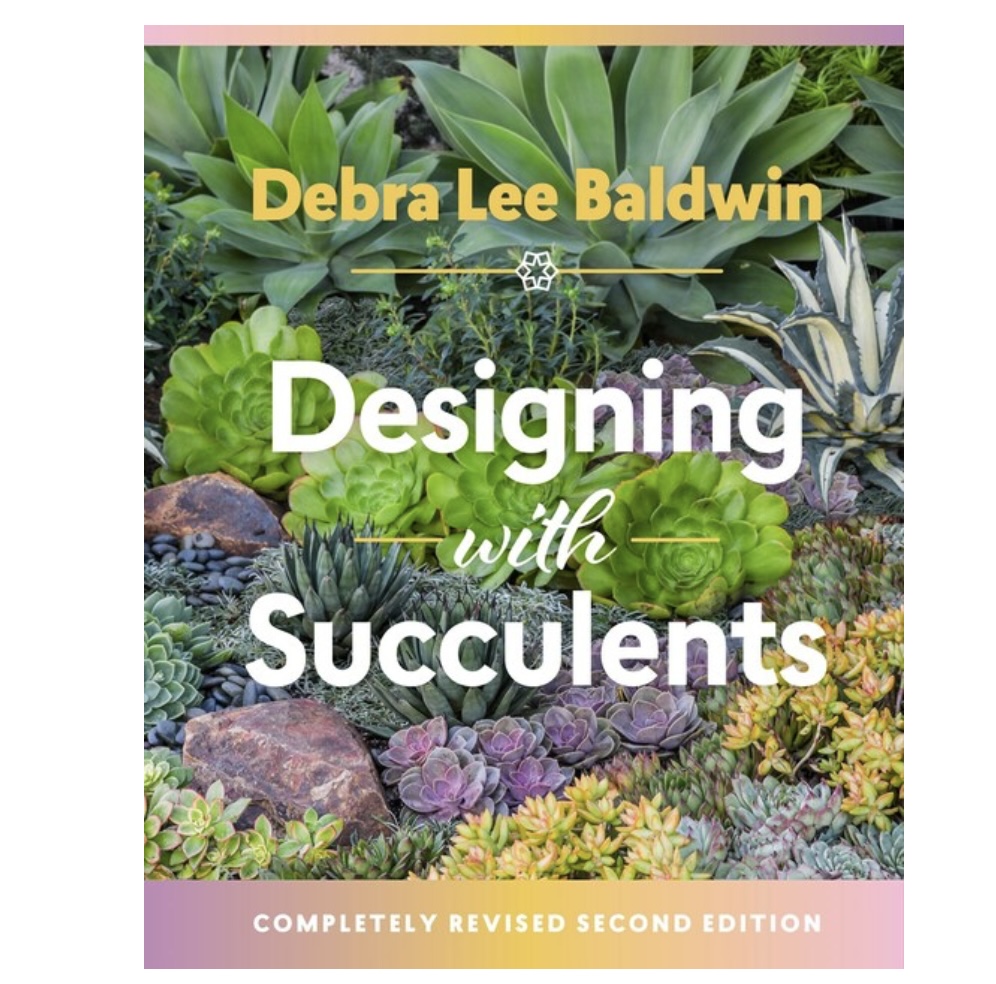
This book was loaned to RRG
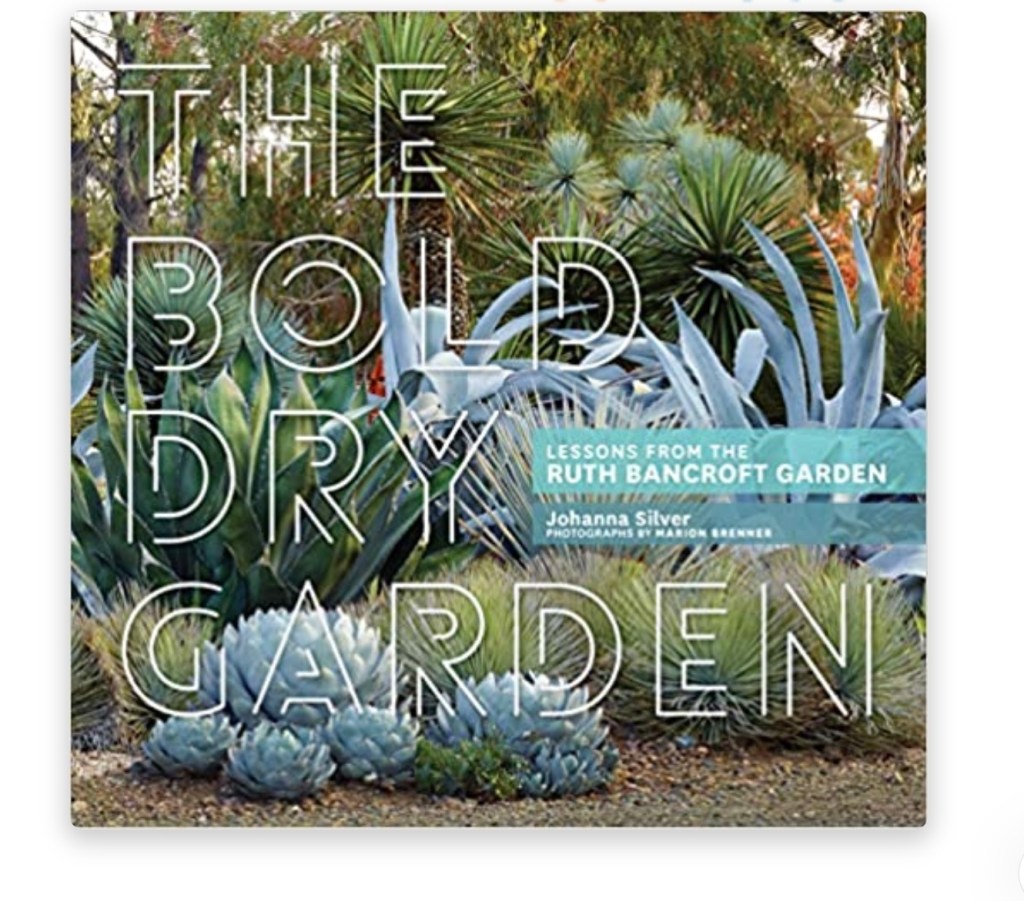
So was this!

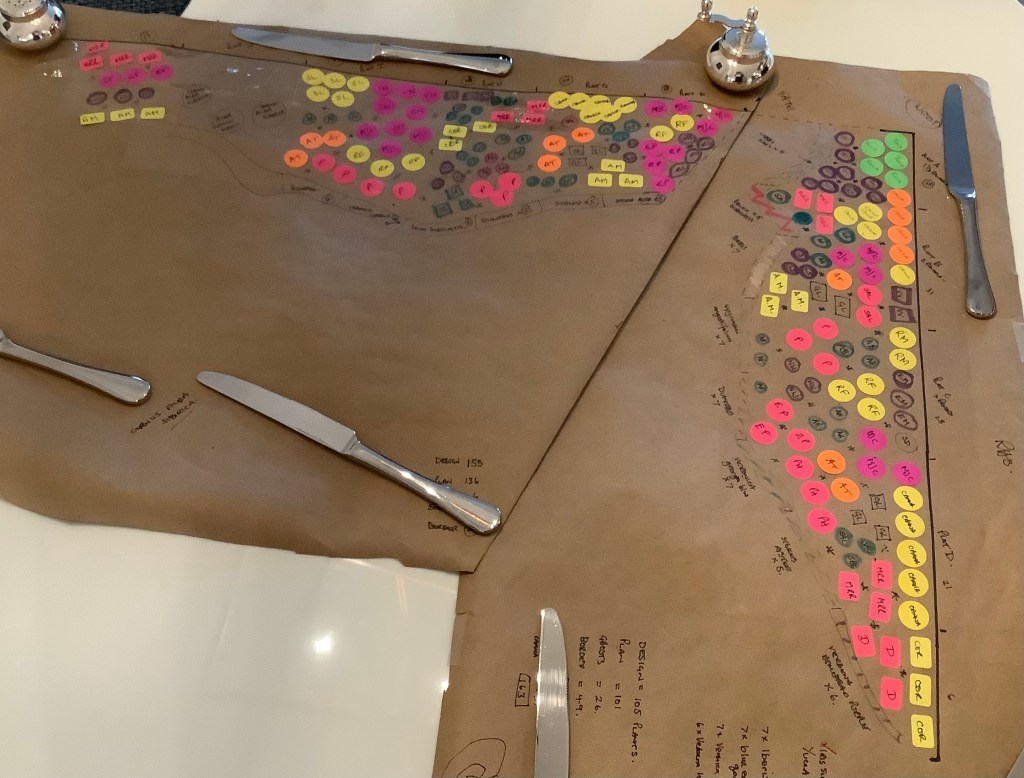
Books are a great source of design inspiration …… as is any gardening reading matter …..or any gardening TV program. The design I developed for our herbaceous perennial beds has drawn on years of absorbing stuff about these colorful repeating beauties. The foundation for the design was that of Piet Oudolf,the great Dutch plantsman and designer – with repeating color blocks, interspersed with grasses, taking account of texture,height, bloom season and duration. The focus is on the overall effect and not the contribution of each individual plant.

Allen would have been proud of my use of brown paper and sticky dots!

This was the foundation design that will dictate the planting. At this point I have to acknowledge the ideas gleaned from another great designer – Jimi Blake.The Irishman who successfully mixes temperate perennials with tropicals. As we live in a hot humid climate – why not give this a go? So I have now included a palm in the design and am trying to identify space for both banana and colocasia. Canna worked well for us in NC so there will be plenty of those spread around the piece.

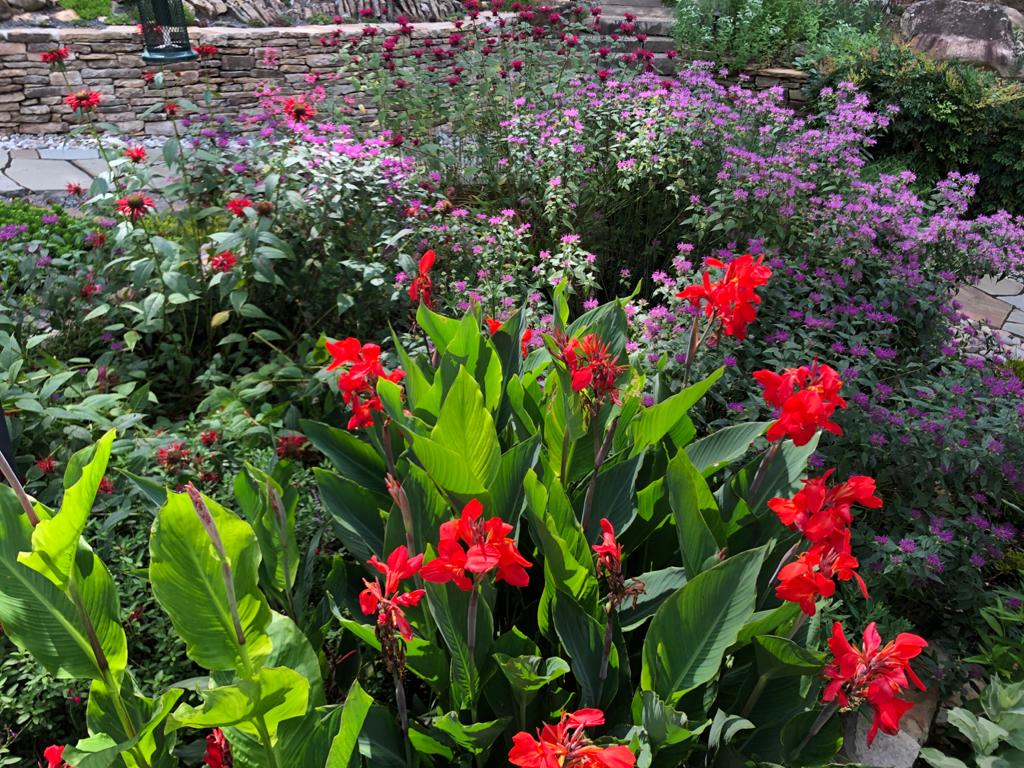
Canna feeling at home in the Ridge garden

The only truth in this design is that I will have made mistakes and this will be version 1 with loads of opportunity for subsequent tinkering. The truth will be set in about 3 weeks time when we start planting. I hope the books on succulents are never returned ………. and RRG becomes a xeric garden aficionado ( maybe with a new truck?).

Early March,2022- any flowers?

The installation team worked for a month and left 2 weeks ago. There is some green and plenty of brown plants showing some promise – but is there any beauty around?

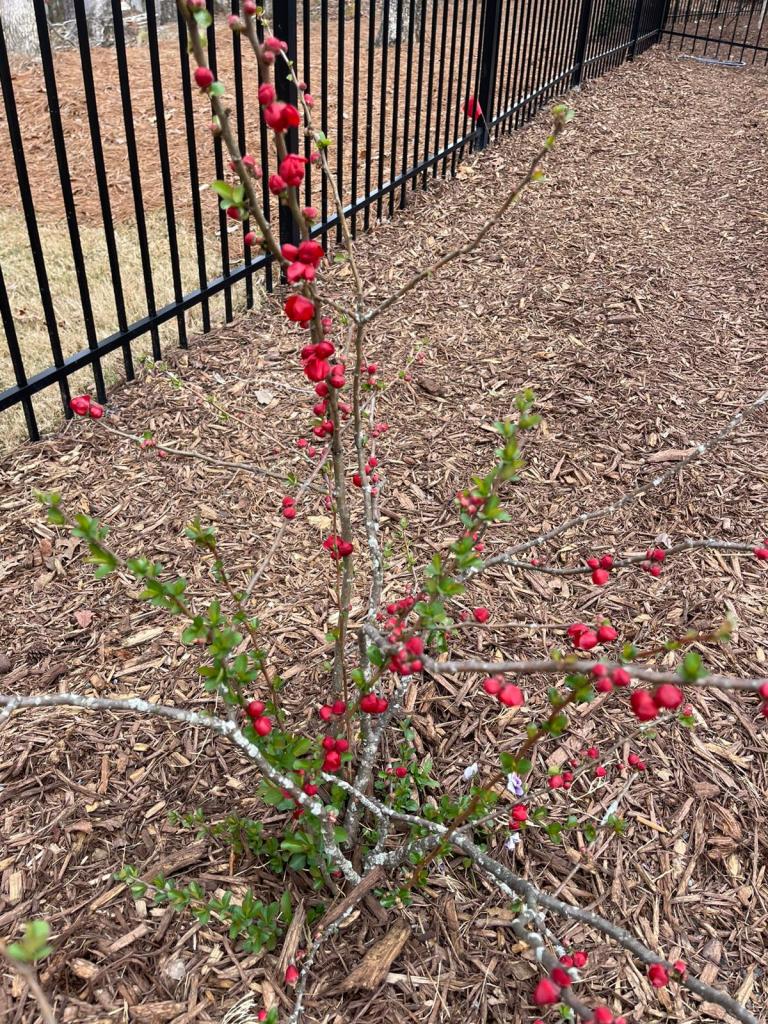
The quince brought from NC – released after 5 years in a pot.
The avenue of cherry trees – exceeding expectations
They will be a nice spring backdrop to the Japanese garden.
Beautiful in their own right
Honeysuckle in flower waiting for the hummingbirds to arrive!

Shaping up!

Lamp posts and seagulls eggs!

The world is watching in shock and horror as the invasion of Ukraine unfolds on a daily basis.Writing about the making of a garden seems irrelevant when people are fighting for their very existence.The events in Europe will impact many lives for a long time to come and the obvious comparison with WW2 is readily being made by commentators.

Andy was brought up in the country, his father was the chauffeur and handyman to the local coal mine executive. Understanding the countryside became second nature, he learned to shoot and was fit and strong because living in the country meant the main way to get about was to walk – or in Andy’s case run. He ran to school where his main interest was football – he learned to write well, with very distinctive and elegant handwriting. He could handle numbers but in no way would he be considered academic. He helped out with animals that were kept on the estate.

His proficiency at football – a strong and aggressive wing half – got him noticed and at the age of 18 he signed professional papers and joined Huddersfield Town, a first division outfit. Whilst his earning capability was not at the eyewatering levels of todays professionals, he did earn orders of magnitude more than my grandfather. However, his professional career was short lived as at the age of 19, he was given a free transfer from Huddersfield to the Durham Light Infantry. His contribution to Britains war effort, starting in 1939, had begun.

Potential faux guns!

Andy gave me his sergeant’s stripes and his DLI cap pin but he didn’t talk much about the war. He did relate the odd anecdote though.He was fit and he could shoot so he found himself training new recruits whilst at the same time guarding a significant part of the coast line in the north of England. His squads were charged with building faux gun installations by putting old telegraph poles and lamp posts into the ground,building a box around them and then a covering with camouflage netting finished the job. From the air, enemy spotter planes would think the coast was heavily fortified.

The northern coastline is home to many colonies of gulls and terns and Andy used his knowledge of the natural world to enhance the diet of his troops. In the Spring, the smallest member of the squad was roped up and put over the cliff edge to collect seagull eggs. Andy told them to only collect eggs from nests with one egg in them. The logic – seagulls have 2 eggs in a clutch, if there is only one egg then it has been freshly laid and edible. The birds will then lay the second egg and rear a single chick.

In 1943 Andy was granted a 48 hour pass so that he could marry his sweetheart,Irene. A wartime wedding – which is another story.

Sunderland Shipowners Cup medal

When the war was over Andy returned home, took a job in the coal mines – the only real option open to him, but did play a few seasons football as a semi professional. A handful of medals are testament to this. In all the interactions I had with my dad, not once did he reference the lost opportunity of being a professional footballer – the possible route to a different life. A pragmatist? A realist ? Whatever. He was just grateful for the life he had.

Design Imperative – front beds

Now that the hardscaping, bed preparation and preliminary plantings are complete I thought it would be useful to share the design imperatives; how they translated into “as built” and what may be some of the possible evolutionary steps.

The over-arching design principles included 4 season interest; variety of planting styles and plants ( alpines/crevice garden; semi shade woodland;full sun perennials);generally lower maintenance; family living space (patio) to enjoy the garden views.A strong nod to stay within budget!

The front of the house, as built , had 3 beds and was planted randomly with typical southern landscape plants.The original design called for an additional 4th bed and an extension to one of the beds. For budgetary purposes these additional bed areas were scrapped and all the existing, builder installed plants would be reused. It was decided to create 5 distinct planting areas within the 3 beds.

A dozen pink knock- out roses are planted and will give a blooming good show here

This segment bed was originally planted with a crape myrtle and azaleas ( all now in the woodland garden). It was always intended to have roses at the front in memory of Allen. We saw a wonderful display of pink knockouts in Hoboken NJ and checked with Michael about their suitability in GA – thumbs up – so that was an easy decision.It also precluded the addition of a 4th bed.

Does not look like it yet, but this is the yellow bed!

The front bed next to the house was planted with azalea,loropetalum, distylium, dwarf arborvitae and boxwood – all repurposed.At Lathallen we had installed a white bed,which worked well – we liked the idea of a single color bed but opted this time for yellow. We have planted a dozen yellow roses , guarded by podocarpus – the one southern landscape feature we aquiesced to. At the end of March we will add Lantana – Chapel Hill – already trialled for us by Mads and BCS – stunning – and a yellow chrysanthemum (as yet variety unknown) for the autumn show. In the autumn we will add narcissi and allium moly to give a yellow spring succession for 2023.

Front bed annex – half completed.

The annex to the front bed, next to the front door, has been designed to give a Japanese stylistic look.A stone feature of white quartz boulders, all found on our plot, will be planted with delospermum and sempervivum.The 3 repositioned dystilium give evergreen structure and the effect will be finished with a single iris plant and Juniper procumbens Nana. It was never intended to put the pine mulch in this area but I turned my back and “shazzam” the team had it down – I did not have the heart to get them to lift it so we will live with it for a few months and then replace it with a permatil mulch. One of the three Japanese lanterns we brought from NC helps to give the final effect.

The conifer bed.

This is one of 2 plantings that gave pause for thought. We liked the idea of a conifer bed- CP loves that blue-grey conifer hew- but we didn’t know whether to focus on a collection -single specimens of different varieties – or ”a look” – multiples of a few varieties. In the end we went for “a look” with a focus on texture and structure. Choosing 5 plants of different heights, in multiples, should give a wave like effect. Easily sourced blue star juniper; wilton blue rug juniper; Juniper horizontalis icee blue ; grey owl juniper and a weeping blue atlas cedar were chosen.All thrive in full sun. This planting also threw up a design conundrum – that of concentration. Do you overplant to give a nicer effect now or plant to get the mature effect in 5 years time. We went for the latter – time will tell if this was the correct choice.

The cost effective bed!

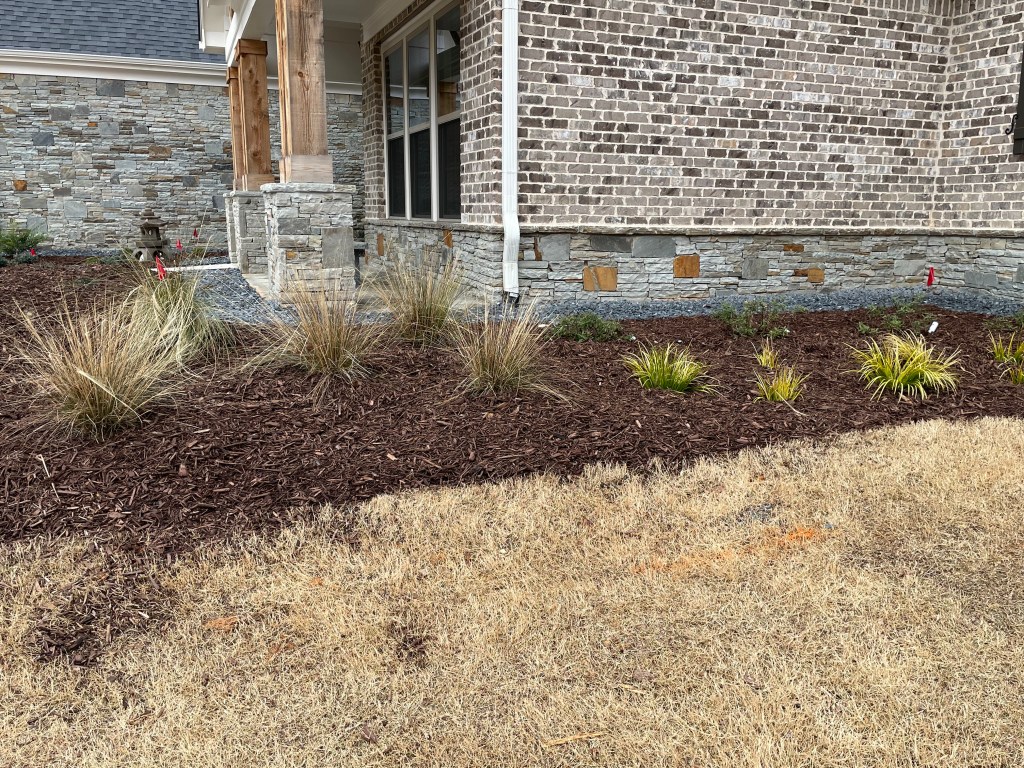
The fifth planting at the front is truly cost effective – but very pleasing nonetheless. We have planted pink muhly and evergold carex – two nice grasses- in a concentrated way – these were haphazard plantings by the builder here and there. Already they look more striking. We added dwarf buddleia ”tutti fruiti” to attract butterflies as this bed is adjacent to our front garden bench ( where already many cups of tea have been enjoyed).

Whilst the beds are indeed sparse at present, they already look better “ in real life” than on the design paper.The next few months are going to be exciting!