Soil

My earliest gardening memories were being taken to the allotment in a wheelbarrow by my dad, Andy. Needless to say, wheelbarrow rides feature when the grandchildren come to visit us. The allotment was important to our family as it was a great source of vegetables to supplement our diets – and I guess the reason why I love vegetables so much. The allotment was also the venue for Andy’s other great passion – pigeon racing ( more about that in later posts).

Now pigeons generate something called ”muck” which gets cleaned out regularly. To keep a pigeon loft sweet, fanciers also used straw and lime. Hence in a corner of the allotment was a compost heap generated from pigeon muck,straw,lime and recycled vegetable matter – overall a great fertilizer. Every year in the winter the compost was spread on the allotment so that the winter frosts help break it down.In the spring the soil was turned over prior to planting to incorporate the compost. I grew up knowing the importance of soil to plant vigor and as I grew older I was encouraged to help dad turn over the garden – great exercise and something I enjoyed. Our vegetables were grown in a fabulous black loam rich in organic matter.

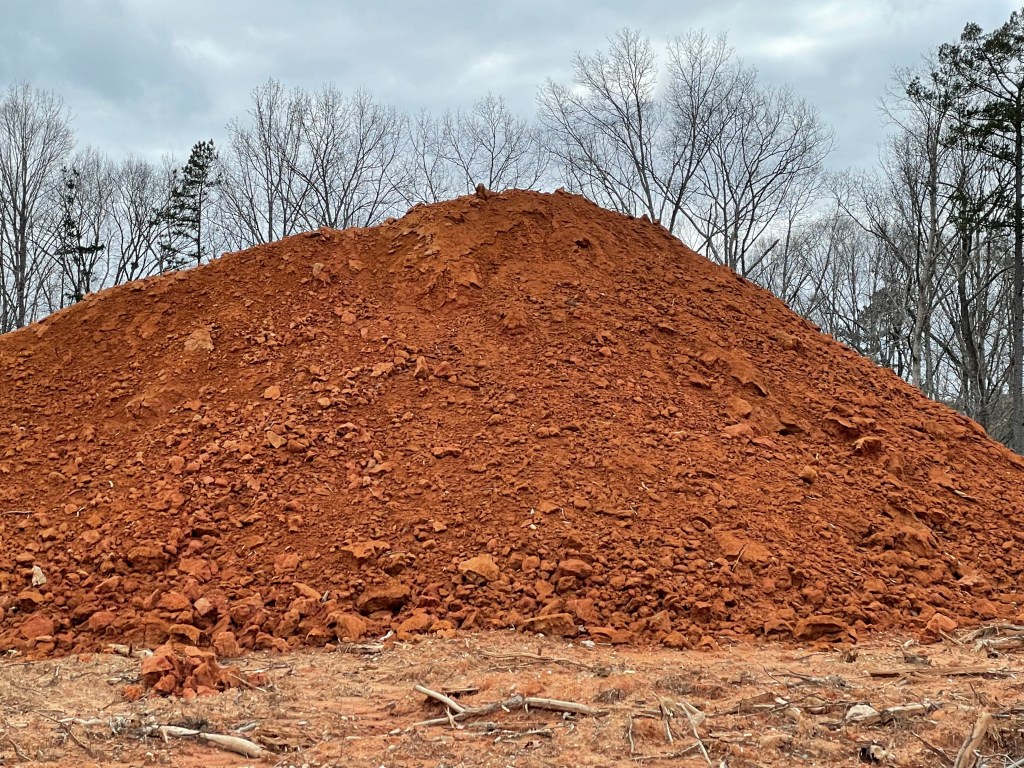
Now, spring forward 60 years and I find I am gardening on red Georgia clay that is not free draining and that can compact to something approaching concrete.On the positive it is rich in nutrients. If AndAllen is to become the garden we want it to be then the soil is going to be the first consideration in our design process – amendment is a must – just how much and with what?
Georgia clay

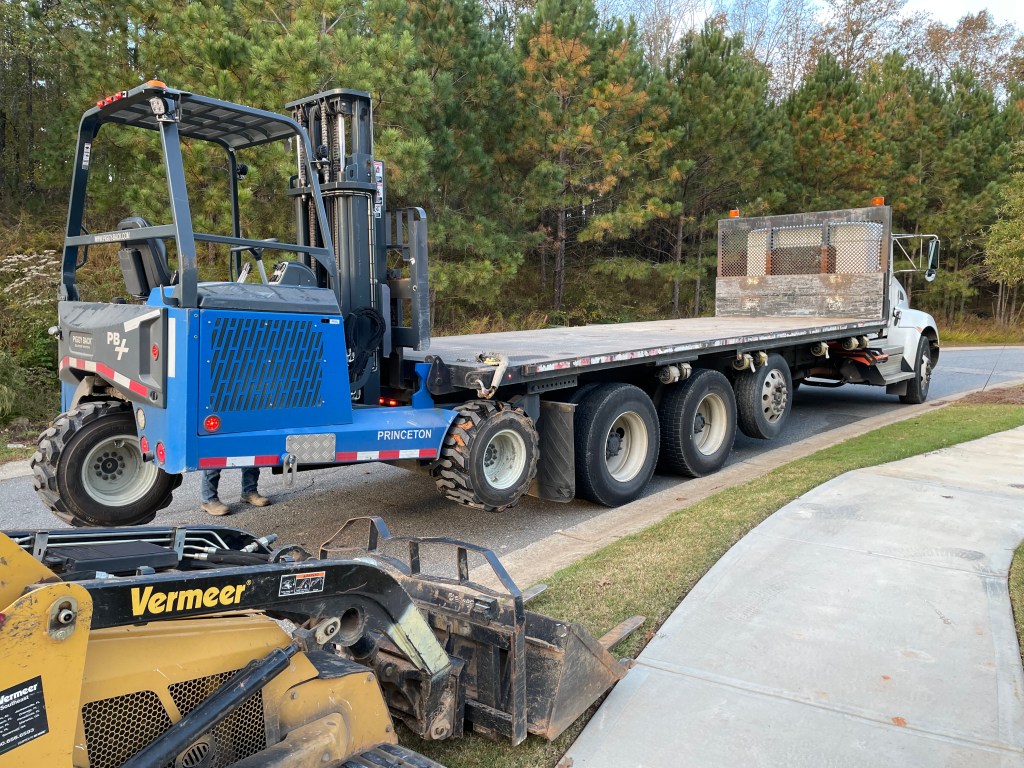
As we have already seen, the crevice garden is built around a natural but somewhat artificial growing medium that is fit for purpose. The rest of the garden is going to have to be supplemented with something similar to improve drainage and workability and to give any new plants a sporting chance.This is a subject I have discussed with my design partner, Michael Gregory , on a number of occasions. The current thinking is to excavate 12-18” of clay and rubble and then till the clay back along with CLM (complete landscape mix) – a good supplement. A lot of work but it should pay dividends in the long term. No doubt there will be further discussions.

The crevice garden growing medium – great drainage characteristics.

CG3 @ AndAllenGarden

We wanted the Crevice Garden to be the focal point of our new garden but with the fairly flat plot it was difficult to decide upon the best location. It had to be visible from the house, transition into the rest of the garden elements and just ”sit comfortably in its own spot”. It was currently a blob on a 2D schematic but it was hard to visualize how it looked. To help, I reverted to basic design tools – big cardboard boxes and turf marking paint. This gave us something to look at, reflect upon,move about and then come up with the final proposal. It also gave a good visual aid to the contractor who was going to execute the ground work ahead of ”stone stacking”. It was also a cheap option – repurposed moving boxes ( thus free) and $8 for the turf paint.

Visualization Tools!

The major design principles had been agreed with Jeremy – they were simple and allowed huge scope for him to work his magic. We love the Burren in the west of Ireland and wanted to incorporate klints into the design; the stone stacking would work around a 3000lb ”sitting stone” which would have a path leading up to it as a safe route for a toddler.That was it.

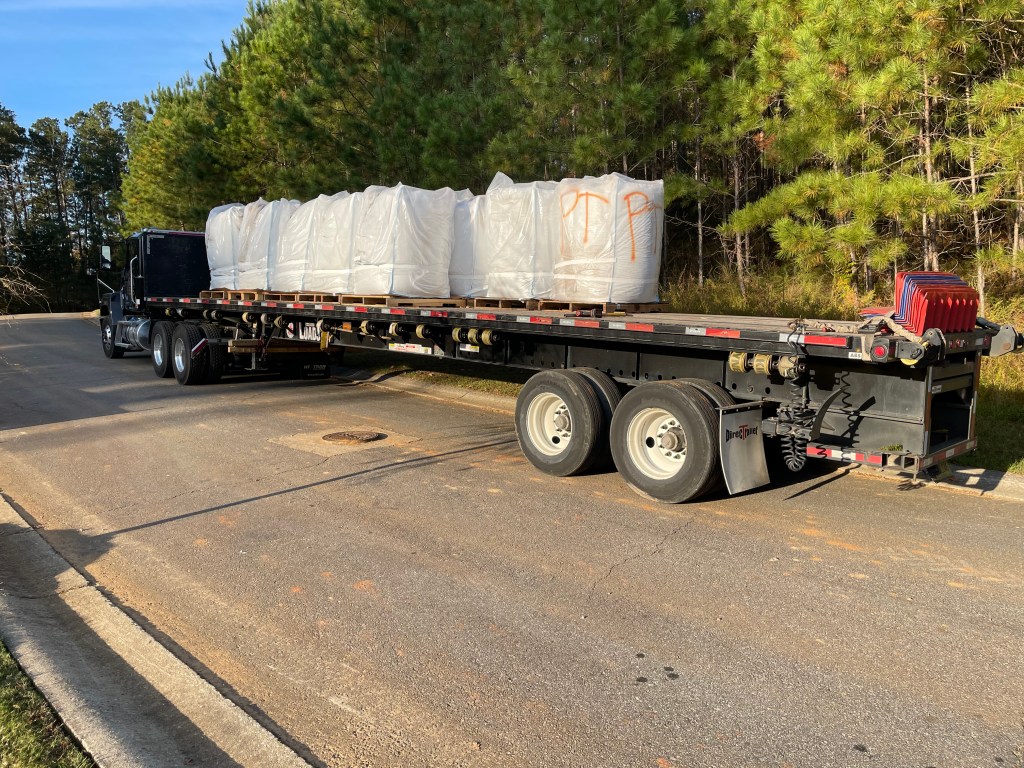
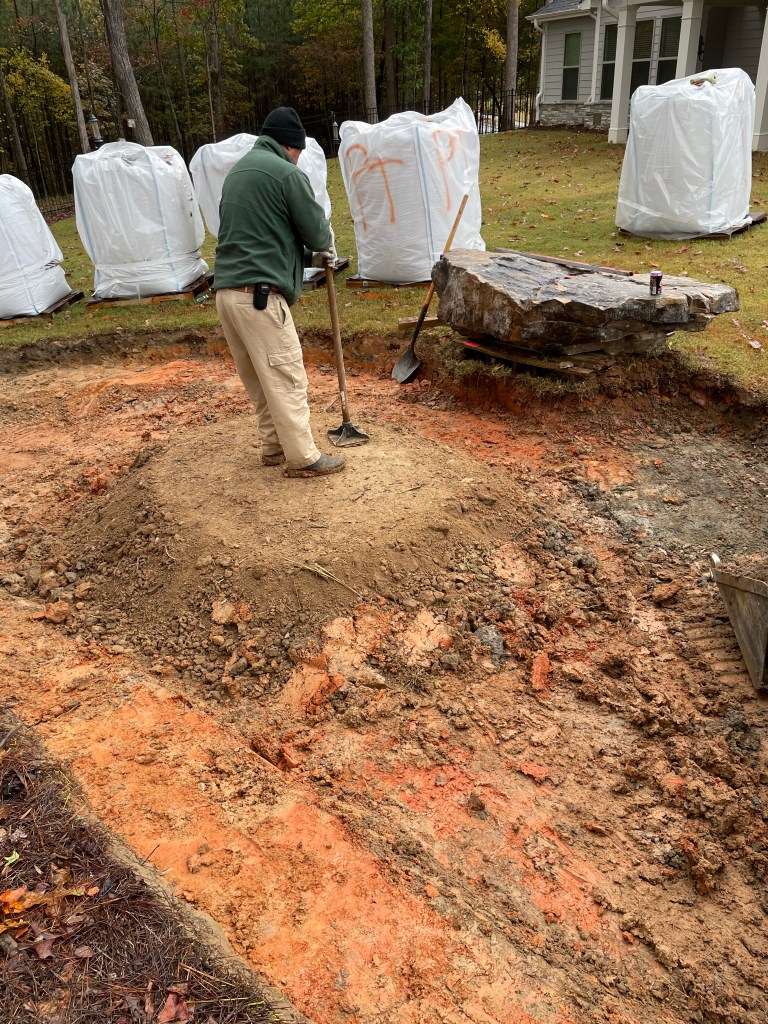
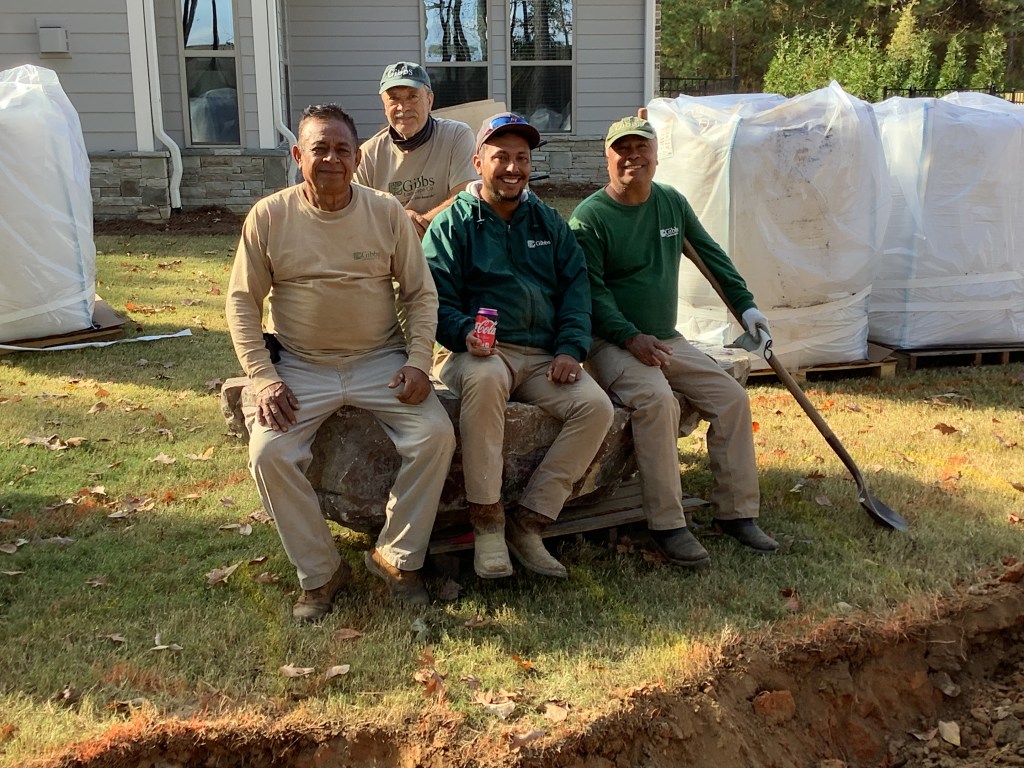
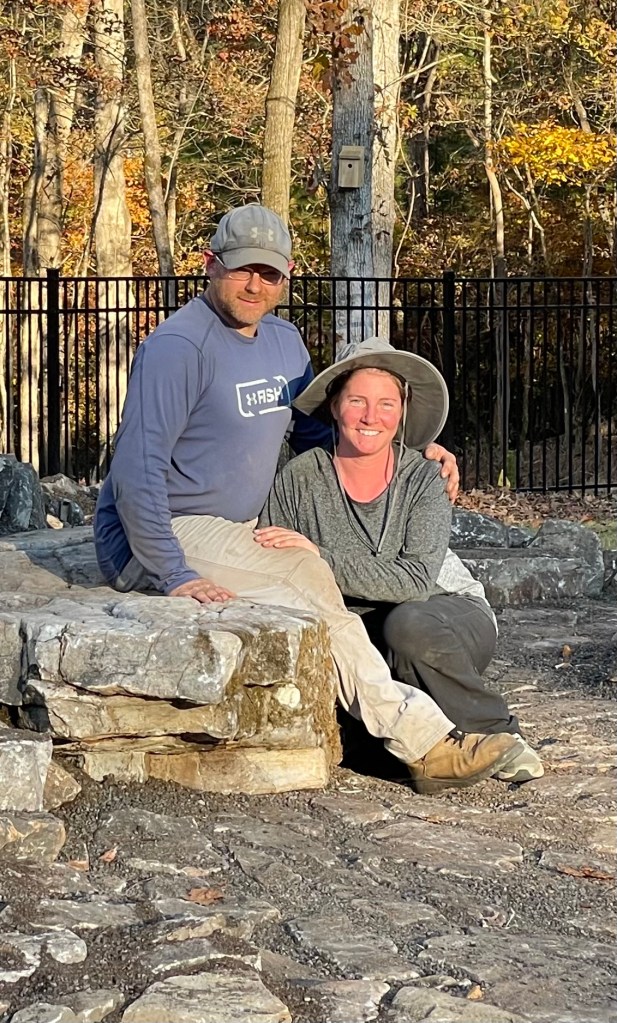
The numbers were straight forward. An 18” hollow dug out to define the boundary of the installation and accept 28 cubic yards of growing medium. 6 pallets of Tennesee field stone would be located close to hand to minimize human carrying, giving a total rock content of about 23,000 Ibs ( about 10 tonnes). 4 days to do the installation ( thankfully fine weather). 3 workers. Jeremy and his partner Meghan doing the skillful bit – yours truly the general gofer, laborer and coffee maker.

CG3 in place

A design + a plan + skill + fine materials + tools + hard work = a crevice garden!

Nice!


Crevice Garden 2

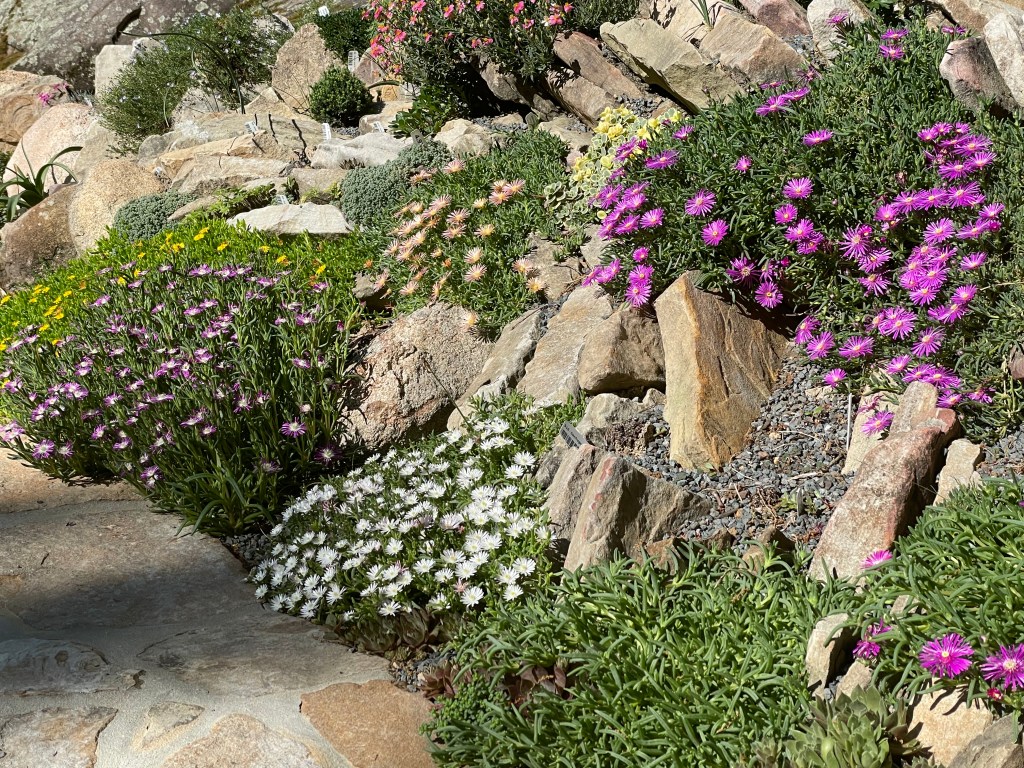
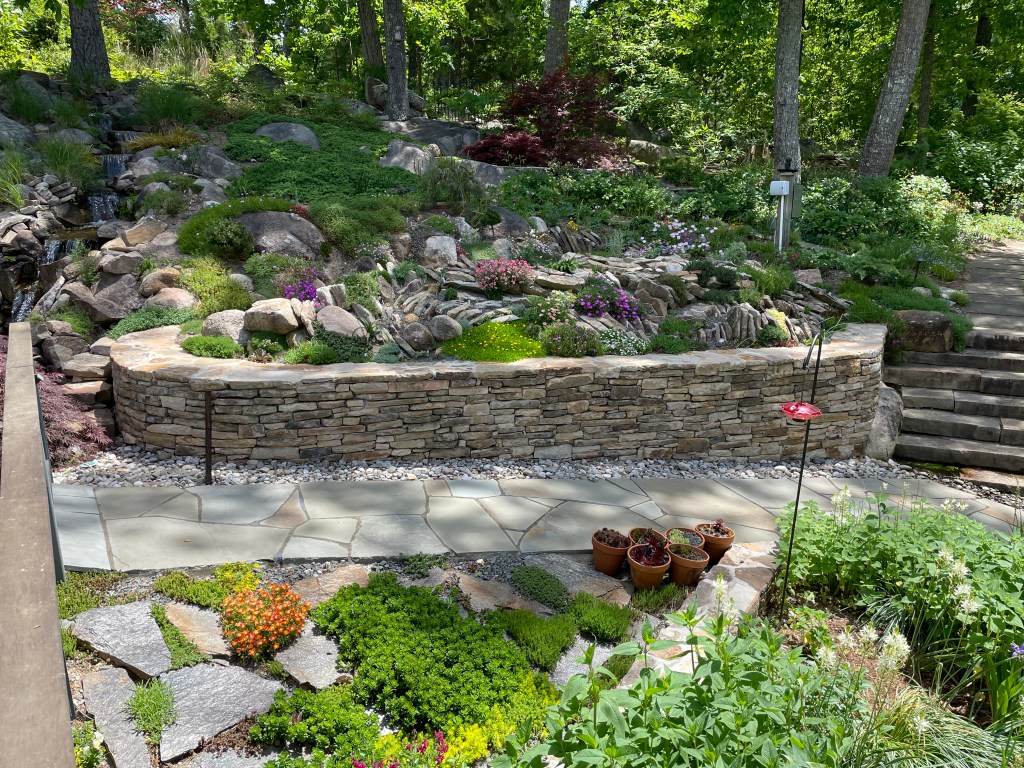
CG2 provided some different challenges with respect to topography and scale but its location made it easy to transition seamlessly into the rest of the garden.The scale issue was resolved simply by running a walkway through the center of the stone work. This also had the advantage of making weeding and maintenance easy. The final design gave lots of planting opportunities due to the variety of crevices and the fact that some were north facing in (hot) shade. The harmony of stone and plants resulted in a satisfying and visually pleasing garden.

Pathway through CG2

The experience of building the 2 crevice gardens in NC at the Ridge garden was invaluable to overcome some of the challenges in Georgia.

Crevice Garden 2 at the Ridge Garden

Passion,Competence & Serendipity

In the 35 years I was in business, one thing I new for certain was that if you came across a person who was passionate about what they did and they demonstrated a high technical competence, then very good things would happen.The same is true in the world of horticulture.

There are plenty of people in this world who display these two human characteristics – sometimes you just never meet them. Serendipity!! My gardening buddy and neighbour in NC, Anna D , invited me to the local gardening club to listen to a chap who was going to talk about crevice gardens.

Enter Jeremy Schmidt – a man who fired up my latent passion for stone in a talk which lasted 45 minutes.

Serendipity! I was struggling with 3 nondescript, disease ridden, anonymous shrubs – in a very prominent situation that resulted in them screaming at me on a daily basis. A pick up truck with a tow hitch, a chain and that moment of irreversibility, put paid to them and created the space for Crevice Garden 1.

Jeremy Schmidt and Meghan Fidler at Andallen

Jeremy and I had a chat at the meeting, a site visit followed, a meeting of minds and a handshake and a few weeks later Crevice Garden 1 was a reality. We worked well together and the experience was just fun!

Crevice Garden 1 at the Ridge

Crevice garden 1 was just the start of Jeremy contributing to our horticultural adventure.

A word also for the characteristic of just being nice to people – if it hadn’t been for Anna going out of her way to alert me to the garden club agenda, this story would have been very different. Gardeners tend to do this but I will definitely try and pay this kindness forward.

For the love of Stone

I was brought up in the NE of England and CP in Ireland. Throughout our early lives we were surrounded by stone – mainly in the form of dry stone walling as we both lived in rural areas. As a student I had summer jobs as a pavier’s mate (John taught me a lot) and also worked in a brick factory. An affinity for hardscaping developed early. Visits to Hadrians wall, the Giants Causeway,Yorkshire Dales ,the Burren and the West of Ireland reinforced this. Allen also built one of the finest rock gardens I have seen – harmony between plants and stone.

When we refurbished the Ridge garden the natural slope encouraged us to invest in stone walling and pathways. The crevice gardens were the icing on the cake.

Stone walling and crevice garden 2 at The Ridge

When it came to the blank canvas that is Andallen there was never any doubt that we would incorporate stone. Another crevice garden was in the plan but we also wanted something we had never had before – boulders. I had become enamored with the stones used in Japanese gardens and wanted to incorporate something along this line. The idea of a sitting stone in the crevice garden was quite appealing.

The attraction of stone? The feel of it in your hand.The security of it underfoot. Natural imperfections. Fault lines. Myriad of shades and colors. Longevity. Moss.The geological process of its being.Mystique.

AndAllen – the origin

CP and I were standing on the patio a couple of days after we closed on the property and we described what we saw.

The hardwood trees were the feature of note.The topography was nondescript – a bit of a slope – perhaps 4 feet from high to low. A finished house to our left, a wooded lot to the right. A glimpse of neighboring houses through the trees. We agreed it was a blank canvas, a nice lot but one without any real character – no personality. We also agreed that it was down to us to make something of it.

A good friend of ours gave his garden ( not the house) a name. He wanted it to have an identity of its own – wanted to personalize the relationship between himself and his garden. The gardening community recognizes the garden by name.
We thought that if we gave our garden a name it would cement our commitment to create something different, make the best from what we had. As we were starting from scratch it would be ours….. down to us.

Early suggestions were just naff because they had no sense of meaning, were made up words or gardening cliches.Then we thought about the two most influential gardeners in our lives – Andy and Allen – our fathers. Hence not only was “AndAllen” the name but the sense of purpose had escalated many fold.

AndAllen- Journey to a new garden

Job mobility has resulted in us owning more homes than the fingers on both hands.Most homes came with mature gardens which, for better or worse, needed little more than tinkering.However,each gave us both pleasure and the opportunity to learn,eg

  • heavily pruned cornus red twigs give a wonderful winter display
  • squirrels like tulips as much as we do
  • there is no such thing as a low maintenance water feature
  • unchecked golden rod can become a brute……etc

Prior to Andallen, 2 gardens gave us the freedom to stamp our personality on them. The first was a new build house called Lathallan where the land had been prepared but the garden not developed.The garden was small but did allow us to develop a number of ”rooms” that were ” on trend” eg a white garden; tropical room. Planting our first and only Dicksonia tree fern was a memorable event. When we left the property we were pleased with what we had done and our confidence had been boosted.

The Ridge Garden

Our greatest challenge and learning experience came from our last garden – simply referred to as the Ridge – situated in North Carolina. A huge make over in a hostile gardening environment – high temperatures and humidity;deer;groundhogs; clay; heavy rains – executed over a 4 year period.It ended up a very special place and quite difficult to give up. The understanding of which plants will flourish even further south will be invaluable.

Andallen will be its own garden but will be influenced by both Lathallan and the Ridge.We can see it in our minds eye……

Purpose of a garden

A garden means all things to all people. For me, a garden is about satisfaction – visually interesting, encouraging wildlife, a place to relax , work and get your hands dirty. A place to share with friends and family.

Wildlife adds interest to any garden

A garden is a very personal space. Part of that personalization is the level of investment that goes into its creation and maintenance.Think of your garden as a balance sheet with incomes and outgoings . All the pleasure you get from a garden adds to the income – cost and time are the major outgoings. Working the garden is a positive, upto a point – beyond the optimum time investment it becomes a chore – a negative. This aspect needs to be considered during the design phase of a garden.

During the design of Andallen I was fortunate in that I had a wonderful sounding board for ideas – CP, the most important person in my life, made sure that my ambition for this garden stayed in line with my capability – future proofing the design by reminding me that at some stage his garden was going to be maintained by an old man!

After months of discussion we ended up with a design with 4 elements. A herbaceous perennial bed, a woodland walk, a ”japanese stylistic” element with all 3 pulled together by a purpose built crevice garden. With the exception of the woodland walk, we had created versions of all these elements before so we were building on our personal experiences, supplementing this with research about gardening in Georgia clay.

At the creation of the high level schematic design we were happy – would we feel the same way when installation started?

In the Beginning.

It could be said that the Andallen Garden has been 60 years in the making. A long time considering that currently, it is nothing more than a few ideas and a focus on our favorite “garden concepts.” These have been formulated into a rough plan, which will be refined as development and installation progresses.

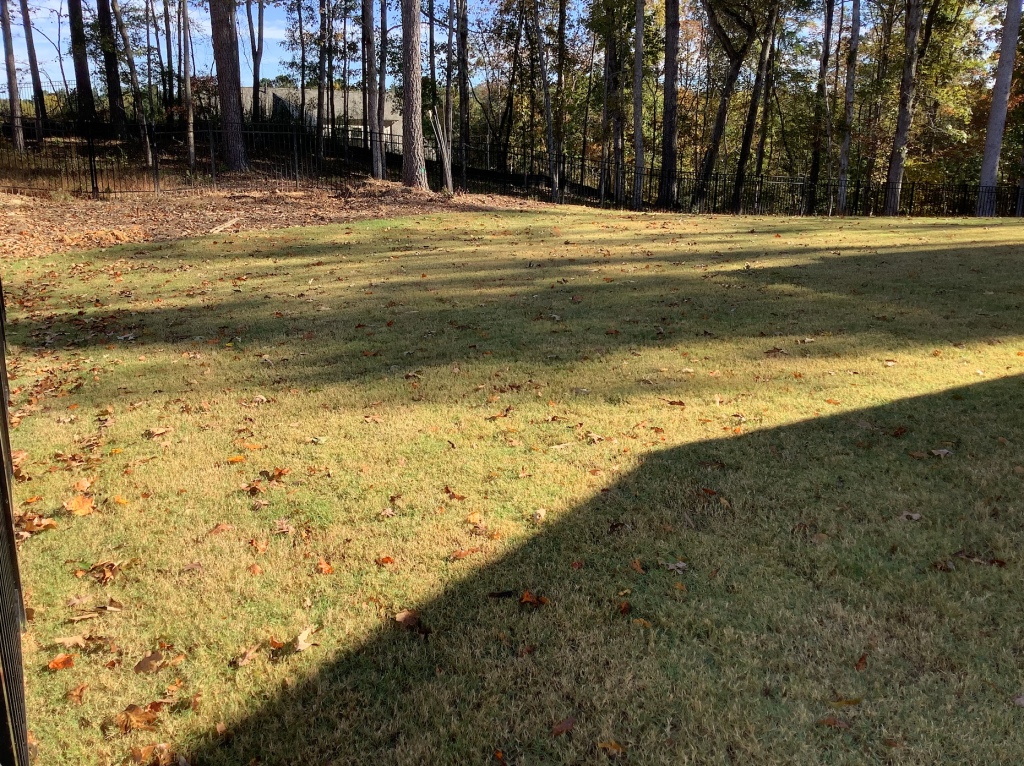
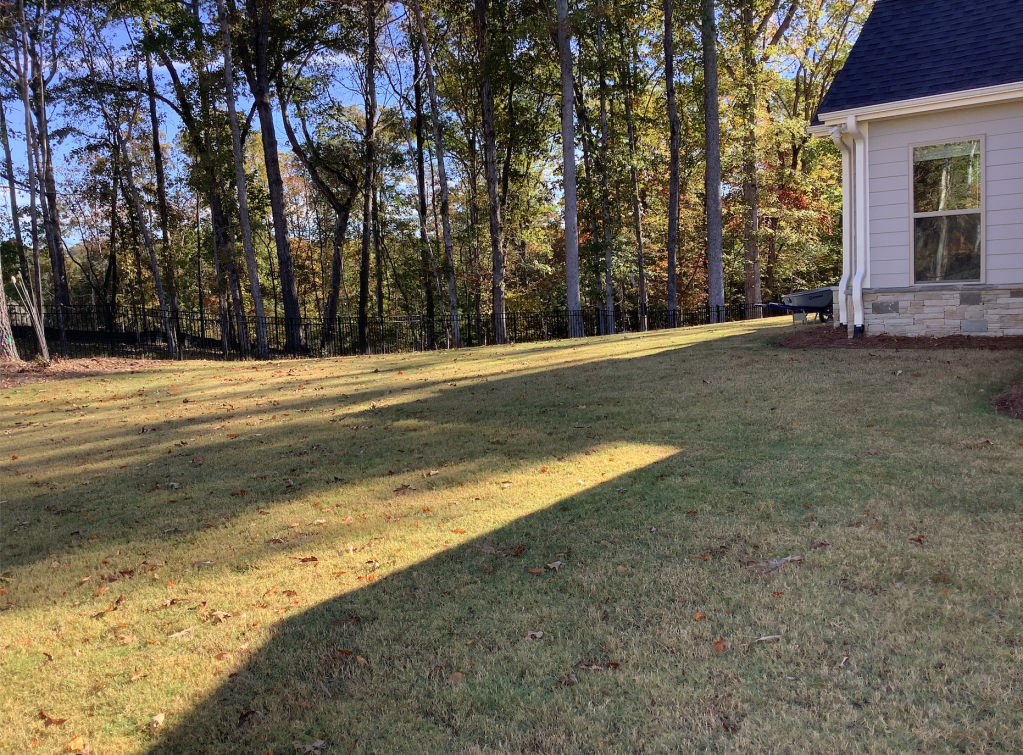
Rear garden starting point

Yes, at present, it is nothing more than a patch of grass that was laid to allow a new house to be sold. There are a couple of beds that have been planted, with little thought, “with what was available a few days before the July 4th holiday,” (not my words — but those of the selling agent). No design, no sense of harmony, just plants in the ground — further insulted by being swamped in pine straw. However, these plants will find a place — just not where they are at present!

Rear garden starting point

This is the story of how Andallen was conceived and how it will come to life. a story told in real time with respect for the historical contributions that will shape its evolution. Many thanks to Girl on the Hudson, who graciously gave up to some of per precious time to give us the skills to share this adventure.